
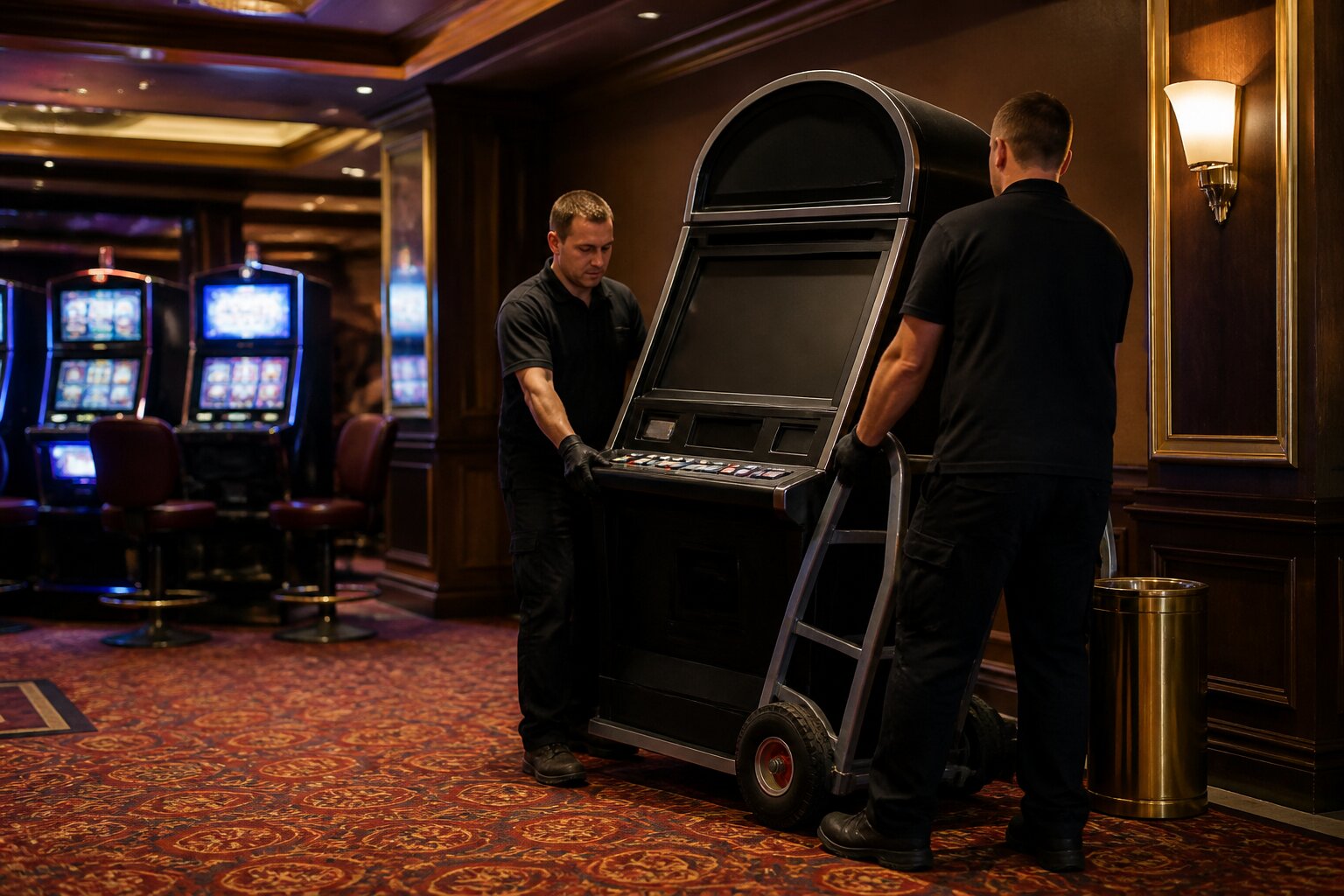
Ever wondered why your favourite slot machine disappears from the casino floor without warning? You’re not alone. Plenty of visitors have turned up, ready to spin the reels, only to find a familiar machine has gone.
There’s more to it than meets the eye. From new technology to changes in player habits, operators have several reasons for swapping out older machines.
Curious about what happens behind the scenes? This post uncovers the main reasons why casinos remove slot machines and explains what it means for your next visit.
Why Are Slot Machines Removed From Casinos?
Slot machines don’t stay on the casino floor forever. Operators regularly review their games to make sure the selection suits visitor demand and meets current technical and regulatory standards.
Performance is a key factor. Machines that receive little play or consistently underperform are often replaced with titles that better capture interest. Updating the mix keeps the floor engaging and more efficient to run.
Technology also drives change. Newer machines tend to offer improved graphics, sound and features, creating a different experience from older units. Replacing ageing equipment can be part of delivering a modern entertainment offering.
Regulatory updates sometimes require action too. When technical or safety standards change, machines that no longer comply must be removed or upgraded to remain on the floor.
Player tastes shift over time, so rotating games helps ensure there are options that suit a wide range of preferences. The aim is to maintain a balanced, contemporary line-up rather than keep machines in place indefinitely.
Transitioning to the next consideration, it helps to look at the mix of practical reasons that feed into these decisions.
Factors Influencing Slot Machine Removal Decisions
Several practical and commercial factors shape the decision to remove a machine.
Maintenance and reliability are important. Older cabinets can be harder to repair and more prone to downtime, which interrupts play and ties up technical staff. Replacing these machines with more reliable models improves the guest experience and reduces operating costs.
Space is a scarce resource. Each machine occupies valuable floor area, so operators favour units that attract players and produce acceptable returns. Machines that fail to generate enough interest are likely candidates for replacement.
Compliance and safety requirements form another layer of influence. Where a machine no longer meets the latest regulatory or technical specifications, it cannot remain in operation until it is brought up to standard.
Financial performance, operational efficiency and regulatory adherence together determine whether a machine stays or goes. These combined factors aim to keep the floor safe, attractive and commercially viable.
How Does Casino Floor Space Affect Slot Choices?
Limited floor space forces operators to be selective about which machines they keep. Every cabinet must justify its place by providing variety, appeal or a specific niche that complements the rest of the layout.
Floor planning also considers traffic patterns and sightlines. Machines placed in high-visibility areas are expected to draw more attention, so underperforming titles in prime spots are especially likely to be moved.
Rotating titles allows operators to present fresh choices while maintaining a comfortable, navigable layout. That variety helps different types of players find games that suit them without the floor feeling overcrowded.
Space decisions are as much about creating a balanced environment as they are about revenue; the goal is a well-considered mix that serves diverse tastes.
Regulatory Requirements and Compliance
Regulation plays a central role in what machines are permitted and how long they can stay in operation. The UK Gambling Commission sets technical and safety standards that operators must follow, and those standards can change over time.
When requirements are updated, operators audit their machines to ensure continued compliance. Any unit that fails to meet the current rules must be removed, modified or taken out of service until it satisfies the standards.
Compliance activities include testing software integrity, verifying technical specifications and ensuring the machine’s behaviour aligns with published information. These checks protect players and keep the operation within the law.
Meeting regulatory obligations is an ongoing process, and changes in the rules sometimes prompt broader rounds of replacement or refurbishment across the floor.
If you've already seen machines refreshed for technical reasons, the next section explains how payout figures fit into those choices.
Do Payout Percentages Impact Machine Removal?
Payout percentages, or Return to Player (RTP), are part of the regulated environment. RTP figures are set by the game manufacturer and verified through testing; operators do not alter those results in day-to-day operation.
If a machine’s software or hardware anomaly causes its payout behaviour to fall outside expected parameters, that issue must be addressed. Affected machines are taken out of service until they are corrected and retested to confirm they meet the certified RTP profile.
Operators routinely monitor performance and act when technical problems are detected. This ensures machines operate as intended and remain compliant with the standards that govern them.
Player Demand: What Do Gamblers Prefer?
Player preference is one of the strongest drivers of what sits on the floor. Trends, themes and specific game mechanics will attract varying levels of interest, and operators pay close attention to those patterns.
Feedback, play data and observed trends help inform which titles remain and which get rotated out. Classic machines that retain a steady audience may be kept, while others are replaced to reflect changing tastes or to introduce new features.
New releases often draw players keen to try recent developments in gameplay or presentation. Balancing popular staples with fresh options keeps the selection relevant to both regulars and newcomers.
When a new game arrives, the need to free space often prompts careful choices about which older machines should go.
How Do New Slot Game Releases Change the Casino Floor?
A high-profile new release can reshape the floor by attracting attention and shifting player interest. To accommodate such titles, operators make space by removing or relocating older or less popular machines.
This process keeps the offering current and gives visitors opportunities to try recent innovations. Replacements are selected to complement the existing mix and to maintain an appealing range of play styles and stakes.
Rotating machines in this way supports variety without compromising the overall structure of the floor.
Debunking Myths About Slot Machine Removal
Several myths circulate about why machines are removed. One persistent belief is that operators change a machine’s odds after it has been profitable or unprofitable; regulation and testing make this impossible in licensed operations.
All machines are subject to certification and testing that verify their behaviour before they enter service. Removal decisions are based on measurable factors such as performance data, maintenance needs and compliance status, not on individual wins or losses.
Another myth is that machines are removed immediately after a big payout. In reality, payouts do not drive removal decisions; instead, operators consider the machine’s overall performance and condition over time.
Understanding these points helps separate anecdote from the operational reasons behind a cabinet’s disappearance.
What Happens to Removed Slot Machines?
Removed machines pass through controlled, documented processes to ensure security and proper handling at every stage. From the point of removal they are logged, labelled and stored in secure areas to maintain a clear chain of custody.
If a unit is beyond economical repair, trained technicians decommission it. Sensitive components and any stored data are securely wiped or destroyed in line with data protection and industry standards before the unit is prepared for disposal.
Some machines that remain in good condition can be refurbished and redeployed, while others follow different pathways:
- Refurbished machines are tested, certified and may be returned to service within the same operation under the operator’s quality checks.
- Units may be transferred elsewhere under strict controls, including transfer documentation and verification of the receiving party.
- Machines can be returned to manufacturers for warranty work or asset recovery.
- End-of-life units are sent to certified recyclers who follow legal and environmental standards for disposal and materials recovery.
Throughout this lifecycle, comprehensive documentation and secure handling are maintained to meet regulatory and operational requirements. Records typically include decommissioning reports, data-wipe certificates, transfer logs and disposal receipts to ensure transparency and compliance.
The Impact of Removals on Players and Casinos
Changes to the machine mix affect both visitors and operators. For players, updates bring new choices and refreshed features, while operators benefit from improved reliability and compliance.
Refreshing the floor supports a varied selection and keeps the venue aligned with current standards and audience interests. For operators, regular review helps manage risk, reduce downtime and ensure machines meet technical and regulatory expectations.
**The information provided in this blog is intended for educational purposes and should not be construed as betting advice or a guarantee of success. Always gamble responsibly.