
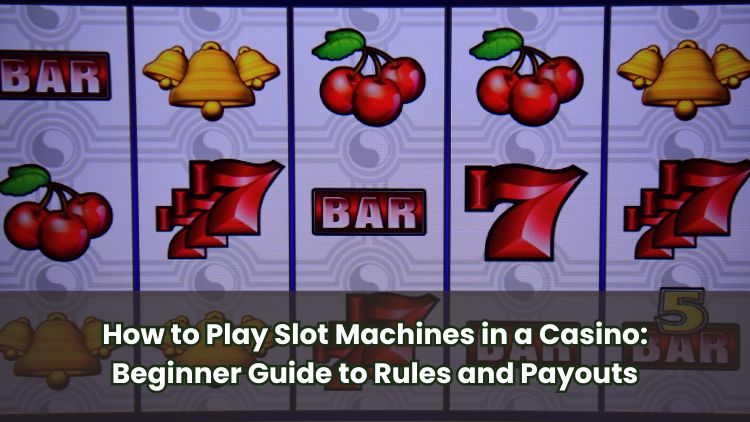
Slot machines are among the easiest games to learn in a casino, but the sheer choice of themes, features, and layouts can make the first visit feel a bit overwhelming.
This guide explains how slots work behind the scenes, what the main machine types do, and how to read reels, paylines, and paytables with confidence. You will also find clear explanations of RTP, volatility, and hit frequency, plus how payouts and jackpots are calculated.
Along the way, we highlight common mistakes to avoid and include practical pointers to help you manage your play.
How Do Slot Machines Work?
Slot machines use a random number generator, or RNG, to decide the result of every spin. When the spin button is pressed or a lever is pulled, the RNG produces a value that corresponds to a specific set of symbols on the reels.
Those symbols have predefined positions and values. The game checks the outcome against its paytable to identify any winning combinations and credits any winnings to the player’s balance automatically. Each spin is independent, so previous results do not influence what happens next.
Treat slots as entertainment, set a budget in advance, and only spend what you can afford. Knowing that each spin is decided by software makes it easier to focus on the basics of the game itself.
To see how those basics show up on the casino floor, it helps to know the different machine types you might come across.
Types Of Slot Machines You’ll Find In A Casino
Casinos usually offer several types of slot machines, each with different features and ways to play:
- Classic Slots: These are straightforward, often using three reels and familiar symbols such as bars or fruit. They usually have a single payline across the middle.
- Video Slots: These are the most common machines. Video slots typically have five or more reels, multiple paylines, and features like animated graphics, sound design, and bonus rounds.
- Progressive Slots: With progressives, a portion of each bet contributes to a growing jackpot. It increases until someone wins it. Some progressives are local to one machine, while others are linked across several.
- Multi-Payline and Multi-Coin Slots: Some games let you activate several paylines at once or adjust coins per line. With more lines active, there are more potential paths for matching combinations.
Exact rules vary from game to game, so it is worth opening the paytable and information screen before you begin.
Now that you know the main types, the next step is understanding how reels, lines, and paytables turn spins into results.
How To Read Reels, Paylines And Paytables
Understanding reels, paylines, and paytables helps you see how wins are formed and what to expect from a game. A quick look at these parts before playing can make the whole experience clearer.
Reels are the vertical columns that spin. Symbols land in rows across the reels to create visible patterns.
Paylines are the specific paths that symbols must follow to form a win. Some games have a single fixed line; others offer dozens that you can enable. Certain slots use “ways to win” systems instead, where matching symbols on adjacent reels count without fixed lines.
Paytables show the value of each symbol, how many need to align for a win, and how special features are triggered. They also explain whether lines pay from left to right, right to left, or both.
Understanding Symbols And Winning Combinations
Symbols are the icons that land on the reels. Each game has its own set, along with any special symbols that change how wins are counted.
Common symbols tend to pay smaller amounts, while higher-value symbols pay more when enough of them align on a payline. The paytable shows how many matches are needed, where they must land, and what each outcome is worth.
How Bonus Symbols Trigger Features
Many slots include special symbols that unlock features. Wild symbols typically substitute for others to help complete a line. Scatter or Bonus symbols often trigger free spins, pick-and-win rounds, or prize wheels when enough appear at once.
The paytable explains how these symbols behave in the specific game you are playing, including any multipliers or extra rules that apply.
What Do RTP, Volatility And Hit Frequency Mean?
Slots use a few key terms to describe how they behave over time: RTP, volatility, and hit frequency.
RTP (Return to Player) is a theoretical long-term percentage of all wagers returned to players overall. For example, a 96% RTP suggests that, in theory, £96 could be returned for every £100 wagered across many spins. It does not indicate what will happen in a single session.
Volatility describes the balance between payout size and how often wins might occur. High volatility games may award less frequent but potentially larger prizes. Low volatility games tend to produce smaller wins more often. This is a design characteristic rather than a promise for any given spin.
Hit Frequency is the percentage of spins that produce any win at all. A higher hit frequency means you may see wins more regularly, though amounts can be modest.
These figures are guides to a game’s general style and should not be read as predictions for short sessions.
How To Place A Bet And Start A Spin
On most machines, the total stake is shaped by settings like coin value, coins per line, and the number of active paylines. The game shows the total before you spin, so it is worth checking that it suits your budget.
When you press spin or pull the lever, the reels rotate and come to a stop. The game then evaluates the symbols along eligible lines and credits any wins automatically.
Set your own boundaries around time and spend, and keep stakes at a level that feels comfortable.
How Are Payouts Calculated?
Payouts come from the symbol combinations that land on active paylines after a spin. Each winning line has a defined value in the paytable, and the game multiplies that value by your line stake. If several lines win on the same spin, their payouts are usually added together.
For example, if a game pays 20x for three matching symbols and your line bet is £0.25, that line would pay £5. Some features, such as multipliers or stacked wilds, can increase the final total, while scatters may pay regardless of paylines.
The exact rules are always stated in the game information, including how features affect outcomes and whether lines pay in one direction or both.
How Do Jackpot And Bonus Features Pay Out?
Jackpot and bonus features sit on top of the base game and can change the size and shape of potential prizes.
A jackpot is typically the highest payout available. Fixed jackpots have a set value. Progressive jackpots grow with each qualifying bet until they are won, then reset. Some progressives can be won at any stake, while others may scale the chance of triggering with the size of the bet. The game rules clarify the conditions.
Bonus features include free spins, pick-and-click rounds, re-spin mechanics, and prize wheels. They are usually triggered by landing a certain number of special symbols or by a bonus event. Each bonus has its own payout structure, shown in the paytable, and any prizes are added to your balance once the feature ends.
Jackpot and bonus wins are resolved by the game software in the same way as standard outcomes, with results determined by the underlying rules.
Can I Use A Strategy To Improve My Odds?
Slots are decided by random number generators, so no pattern or system can change the outcome of an individual spin. Each spin is independent.
Some players prefer games with a higher published RTP, as these are designed to return a greater share of wagers over very long periods. Others tailor stakes and lines to manage how quickly their balance moves. These choices can shape the experience but do not influence the underlying results.
A practical approach is to set clear limits and take breaks so sessions remain manageable.
What Common Mistakes Do Beginners Make?
Many beginners skip the paytable and rules, then feel confused about how wins are formed or why a bonus did not trigger. Taking a moment to check how paylines work, which symbols matter, and whether features pay in both directions removes that guesswork.
Another common issue is staking more than intended. Without noticing, players can raise their total bet by enabling extra lines or increasing coin size. Checking the total stake before each session helps keep spending under control.
It is also easy to assume a machine is “due” after several losses. Slots do not track past results, so one spin does not make a future win more likely. Chasing previous losses or playing longer than planned rarely ends well.
If gambling starts to affect your well-being or your finances, seek support early. Independent organisations such as GamCare and GambleAware offer free, confidential help.
Play Slots Online at Cash Casino
If you are interested in playing slots online, Cash Casino offers a range of games to explore from home, including progressive jackpots, Megaways with extended reels, and classic three-reel titles.
Cash Casino is licensed by the UK Gambling Commission, and our platform includes tools to help you manage your play. You can set deposit limits, use session reminders, and take time-outs whenever you need them.
All games include clear information screens and paytables, and our support team can help with questions about games, payments, or account settings.
If you would like to try our site, feel free to create an account with Cash Casino, deposit some funds to play with and explore the games at your own pace. Set limits that suit you, and play only with money you can afford to spend.
**The information provided in this blog is intended for educational purposes and should not be construed as betting advice or a guarantee of success. Always gamble responsibly.