
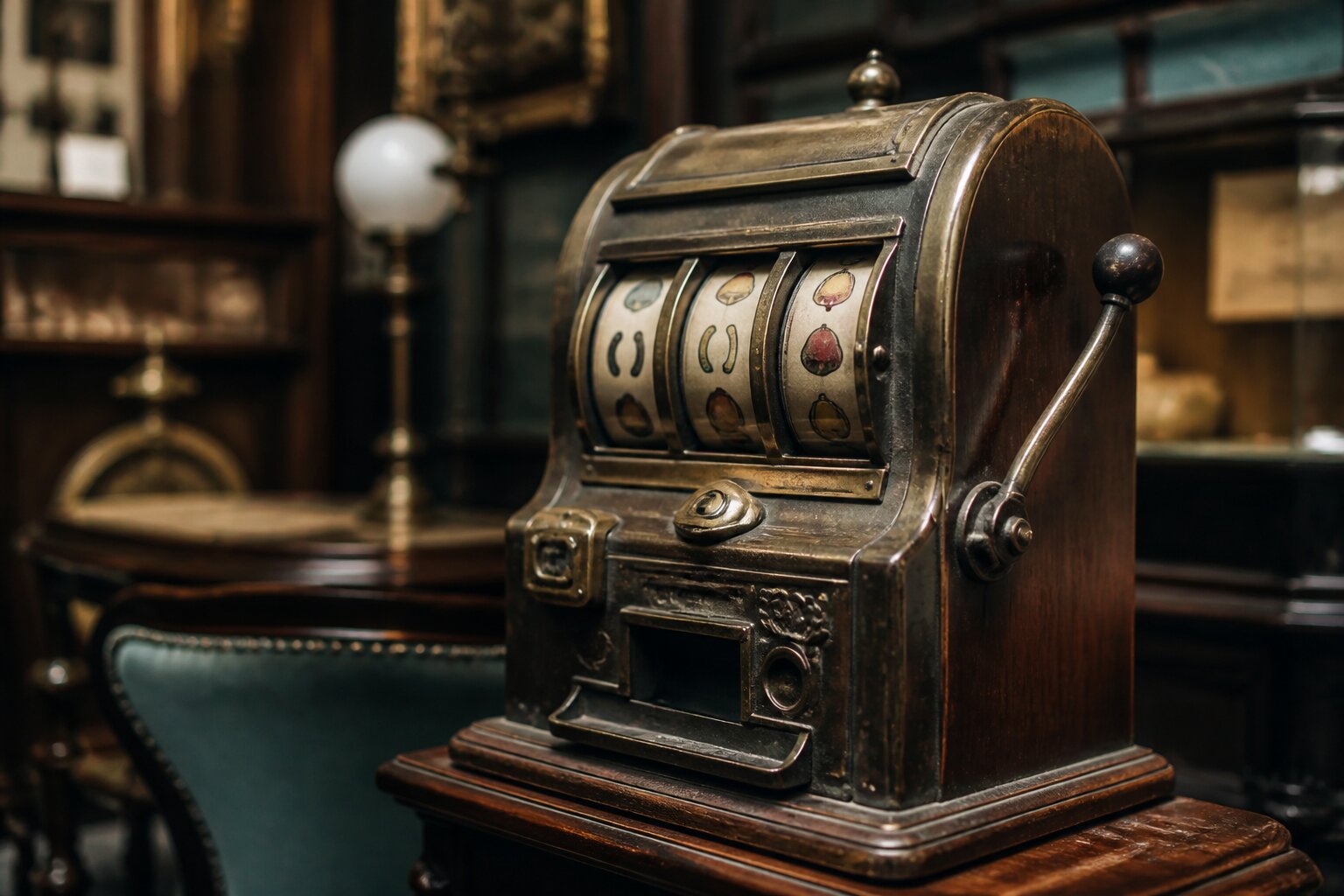
Ever wondered where those spinning reels and flashing lights all began? The world of slot machines is packed with fascinating stories, surprising beginnings and clever inventions that changed gaming forever.
From pubs and clubs to apps on your phone, slot machines have been a familiar feature for generations. Their journey didn’t start with the technology-packed games we know today; the early days are full of quirky mechanics, inventive minds and intriguing details that shaped the games we see now.
Curious about how the very first slot machine came to be and what made it so influential? Let’s dive into the remarkable history behind this game and follow how a simple idea grew into a global pastime.
What Inspired the Creation of the First Slot Machine?
In the late 1800s, public houses, saloons and social clubs were lively places where proprietors experimented with attractions to bring people through the door. At the same time, the Industrial Revolution had put mechanical inventions into the public eye. Coin-operated devices such as vending machines and automata were novelties that drew attention.
Card games and other wagering activities were common, but there was appetite for a quicker, purely mechanical form of entertainment—something an individual could use without the need for opponents or lengthy rules. The mix of social venues and fascination with automated devices created a clear demand for a compact, coin-operated game that offered immediate outcomes and simple appeal.
That context explains why an inventor would focus on small, durable machinery with clear, visible results. The cultural and technological backdrop made the slot machine an idea people were ready to embrace.
How Did Early Slot Machines Work?
Early machines were entirely mechanical. A player inserted a coin and pulled a lever that set a set of reels spinning. Each reel carried painted symbols—bells, horseshoes, card suits and fruit were common choices—and the machine stopped the reels when internal springs and gears released them. If symbols aligned across the central payline, the mechanism triggered a payout.
Payouts took a few forms. In many locations the machine would drop coins directly into a tray; in other places prizes such as drinks or cigars were offered depending on house rules. The engineering mattered: careful gear ratios, detents and pawls determined how the reels moved and stopped, and makers introduced anti-jamming features to keep the machines functioning in busy venues.
There were no electronic screens or software. The apparent randomness of each spin was produced by the mechanical tolerances and interactions of the parts; outcomes were not influenced by player skill. Over time, manufacturers refined the internals to make outcomes more consistent and to reduce the possibility of tampering.
Understanding these mechanical roots helps make sense of later developments when electricity and then microchips were introduced to expand what machines could offer.
The Evolution of Slot Machines Through the Decades
Slot machines have changed considerably since those early cabinets. Improvements unfolded in stages, each adding a new layer of capability and safety.
Manufacturers focused first on durability and reliability: stronger casings, improved coin mechanisms to prevent jams and fraud, and sturdier internal gears. Those mechanical advances allowed for features such as automatic coin payouts and larger, visible jackpot mechanisms that drew players’ attention.
A later step came with electronics. From the 1960s onwards, electric circuits and eventually microprocessors replaced many moving parts. That shift allowed sound, lights and multiple paylines, and it created audit trails and fixed odds that operators and regulators could test. Modern machines integrate certified random number systems and monitoring tools so game behaviour can be independently checked.
As machines evolved, so did oversight and player protections. Regulations introduced testing standards, regular inspections and controls that make it clearer how games perform. These technical and regulatory changes moved the industry from simple mechanical amusements toward a more structured and transparent form of entertainment.
Key Mechanical Changes
Mechanical refinements concentrated on reliability and fair operation. Makers improved lockwork to prevent tampering, added anti-jamming features in coin paths and engineered payout mechanisms that could discharge coins automatically. Visual design also became important: larger windows and more prominent payout displays helped machines attract attention in crowded venues.
The Introduction of Electronic Features
Electronics brought greater variety. Sound and lighting effects were used to create fuller sensory experiences, while microchips enabled multiple symbols per reel, bonus features and more complex payout tables. Importantly, digital systems made it simpler to keep records of activity, which supports regulatory inspections and helps operators manage machine behaviour.
Taken together, these changes transformed the player experience and the way operators and regulators manage games.
Who Invented the Slot Machine? Meet the Pioneer Behind the Idea
Charles Fey, a mechanic in San Francisco during the late 19th century, is widely credited with creating the first device that set the template for modern slot machines. His most famous machine, the Liberty Bell, featured three spinning reels and a single payline—a straightforward layout that made the game accessible to anyone.
Fey’s design stood out because it combined simplicity with an automatic payout system. Instead of rewarding players with services or goods, the Liberty Bell could release coins directly into a tray when a winning combination appeared. That mechanical payout was unusual at the time and helped the machine spread quickly through saloons and social venues.
Fey’s approach—simple rules, automatic rewards and robust mechanics—became the foundation on which later makers built. While other inventors experimented with different features, the core concept of reels, symbols and an automatic payout endured.
As these machines became more widespread, concerns about player protection and fair play prompted greater regulation, steering the industry toward clearer standards and safer practices.
How Slot Machines Became Popular in British Culture
When slot machines arrived in Britain, they adapted to local tastes and settings. Branded often as fruit machines, their symbols—cherries, lemons, bells—made them recognisable fixtures in pubs, working men’s clubs and seaside arcades. Their compact format suited the pubs and arcades where space was limited, and the machines offered quick sessions that fitted casual social visits.
The style of play and the visible design elements made machines part of leisure time without requiring long commitment, so they became a familiar adult pastime in many communities. Over the decades, legislation and local licensing clarified where and how machines could be used, introducing age limits and device classifications to align availability with public policy.
This combination of cultural fit and regulatory framework kept the machines present but controlled, shaping a uniquely British relationship with the devices that balances access and oversight.
Misconceptions & Myths About the Origins of Slot Machines
There are several myths around how slot machines started. One mistaken idea is that early devices were created purely to produce large winnings; in reality, they began as simple amusements intended to draw customers and provide quick, inexpensive entertainment.
Another frequent story describes early machines as inherently corrupt or hidden in back rooms. While some devices operated in loosely regulated spaces, most were displayed openly in public venues and intended as lawful entertainment. The notion that original machines could be easily beaten with simple tricks also overstates the case: mechanical designs produced unpredictable outcomes for players, and manufacturers added anti-tampering features as the machines became valuable.
Finally, stories that romanticise dramatic one-off inventions tend to overlook incremental innovation. Improvements in materials, manufacturing and electrical technology all contributed to the machines people used across the 20th century.
Clearing up these misconceptions gives a truer picture of how the machines developed: gradual technical refinement responding to commercial demand and regulatory pressure.
The Lasting Impact of Slot Machines on Modern Gaming
Slot machines shaped many of the conventions now common in gaming: straightforward interfaces, immediate results, and strong visual cues. Those elements proved adaptable to later formats, from electronic cabinets to online games.
More importantly, the industry’s growth led to a stronger emphasis on controls and player safeguards. Today’s games are often accompanied by clear information about how they operate, limits players can set and tools to take a break if they need to. Regulators and operators work together to ensure games are tested and that players have access to support and guidance.
The story of the slot machine is a story of engineering, design and societal response. From a mechanical novelty in a saloon to a regulated component of modern entertainment, the machines have influenced how games are built, presented and managed. That legacy is one of both invention and adaptation, and it explains why these devices remain a recognisable part of the leisure landscape.
If you want to explore further, the machines’ technical details, social history and regulatory development all offer rich lines of inquiry—and there’s plenty more to discover about how a simple invention grew into a lasting form of entertainment.
**The information provided in this blog is intended for educational purposes and should not be construed as betting advice or a guarantee of success. Always gamble responsibly.