
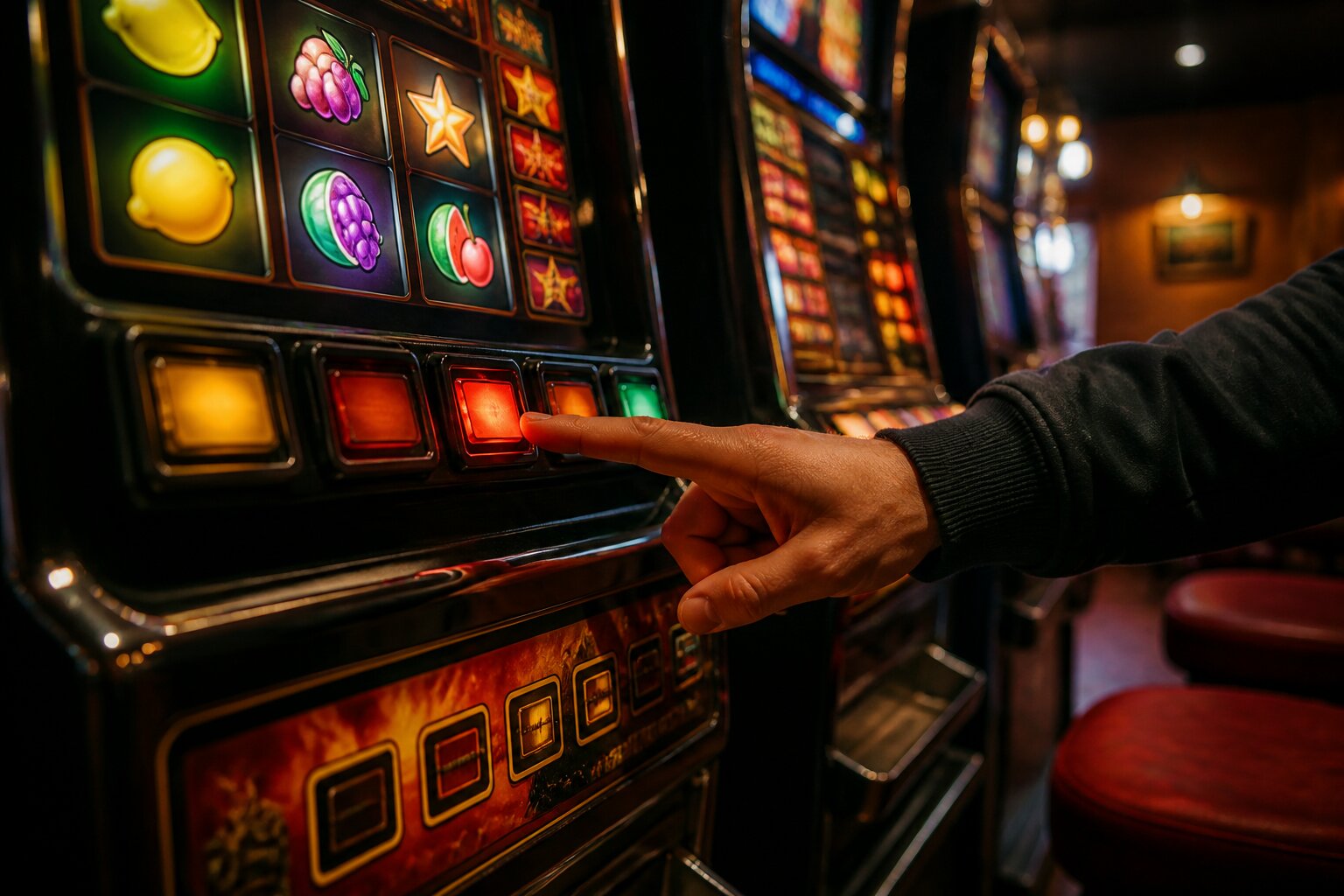
Ever heard whispers about secret button presses that can make a fruit machine pay out? It’s a familiar story in pubs and clubs, one that sparks curiosity and a bit of excitement among players.
You might have wondered whether a special code or sneaky trick could tilt the odds in your favour. From old mechanical tales to modern internet rumours, the idea of a hidden advantage has persisted.
This article examines those rumours and separates fact from fiction, so you can approach machines with a clear sense of how they actually work and what is — and isn’t — possible.
What Are Fruit Machine Cheat Codes?
‘Fruit machine cheat codes’ refers to supposed tricks or secret patterns claimed to help players win more often or trigger payouts. These tales usually describe sequences of button presses, cabinet taps, or timing gimmicks that purport to influence the reels or unlock a payout mode. They are part anecdote, part folklore, and often repeated without evidence.
Typical stories include pressing ‘Hold’ and ‘Cancel’ in a particular order, tapping a corner of the cabinet while a reel spins, or inserting coins in a specific rhythm. Many of these accounts relate to much older, mechanically based machines where rare faults could occasionally be exploited, rather than to modern electronic units.
The next section looks at whether any of these sequences actually work on real machines today, and why those stories have stuck around.
Do Secret Button Sequences Actually Exist on Fruit Machines?
There is no reliable way to cheat a properly maintained fruit machine using button sequences or secret combinations. In licensed venues, outcomes are determined by systems that are designed to be tamper-resistant and unpredictable, so the neat tricks from pub lore do not apply to contemporary machines.
That said, the persistence of such stories can be explained. People remember unusual wins and create explanations for them; myths spread quickly because they are easy to pass on; and occasional early mechanical faults produced memorable incidents that seeded later myths. Read on to see some of the most common examples of these myths and why they don’t hold up.
Myths & Urban Legends Explained
Many colourful claims circulate among players. Examples often cited are:
- Pressing the ‘Hold’ button three times then the ‘Collect’ button to force a jackpot
- Tapping the side of the machine during a spin to ‘nudge’ a win into place
- Rapidly alternating the ‘Start’ and ‘Cancel’ buttons to confuse the electronics
- Inserting coins in a certain rhythm to unlock bonus features
These accounts are rooted in times when machines were simpler and occasional mechanical faults could create exploitable behaviour. In modern electronic machines, however, such methods do not produce consistent changes to outcomes. The remainder of this article explains the technology and protections that make that the case.
How Modern Fruit Machines Prevent Cheats
Modern machines employ several layers of technical and physical protection to prevent manipulation. At the core is software that controls game logic and prize triggers; this software is secured so it cannot be altered by routine button presses or by players interacting with the cabinet.
Machines are fitted with anti-tampering hardware, sealed access points and logging systems that record unusual activity. On top of that, regular testing and certification ensure software behaves as intended; any irregularities detected during inspections are corrected. These safeguards mean attempts to influence or “confuse” a machine through external actions are quickly detected and have no predictable effect.
Understanding those protections helps explain why the old tales about cheat sequences survive in conversation but not in practice. To see how outcomes are actually decided, the next section explains the technology behind a spin.
How Do Fruit Machines Really Work?
At the heart of modern fruit machines is a Random Number Generator (RNG), a piece of software that continuously produces sequences of numbers. When a player initiates a play, the game selects numbers from the RNG to determine the position of each reel. Because the RNG runs constantly and selections are made in microseconds, outcomes cannot be influenced by the timing of a button press or by physical nudges.
Return to Player (RTP) is the long‑term percentage of stakes a machine returns, expressed as an average over many plays. For instance, a 90% RTP suggests that, over a very large number of spins, the machine would return about £90 for every £100 staked. Short sessions can vary widely from that average because each spin is independent and governed by the RNG’s immediate output. Typical pub machines cover a range of RTP values depending on category and design.
Game features such as nudges, holds or bonus rounds are also driven by the game’s code and by random events determined by the RNG. These features are implemented within strict parameters so their frequency and behaviour are predictable at a systems level, while remaining unpredictable to any individual player. With that technical picture in mind, it’s worth considering the legal consequences of trying to interfere with machines.
Are There Legal Implications for Trying to Cheat Fruit Machines?
Interfering with gambling equipment is a criminal offence under UK law. The legislation covers any attempt to manipulate, alter or defraud a machine, whether by using tools, external devices, or trying to apply so‑called cheat sequences. Consequences for those found to be tampering can include arrest, prosecution and penalties that range from fines to imprisonment in serious cases.
Venues and operators take suspected interference seriously: staff are trained to spot suspicious behaviour, monitoring systems flag irregular activity, and venues can impose bans on individuals. Legal action also carries wider implications, such as a criminal record that can affect employment and travel. Knowing these risks makes it clear that attempting to manipulate a machine is both unsafe and unlawful. The final section covers how to approach playing in a way that keeps it enjoyable and within the rules.
Responsible Play: What Players Should Keep in Mind
Fruit machines are intended as entertainment and not as a means to secure income. Players benefit from setting personal limits on time and spend before they play, and from using venue-provided controls such as deposit or stake limits and self-exclusion where available. These measures help prevent play from becoming harmful and make it easier to stop when it’s no longer enjoyable.
If gambling begins to affect wellbeing or day-to-day life, confidential support and guidance are available through specialist services that offer advice and practical tools. Recognising when play is no longer fun and acting early to seek help protects both financial and personal wellbeing.
Keeping play controlled and informed ensures that fruit machines remain a casual pastime rather than a source of stress, and that interactions with machines stay within legal and safe boundaries.
Play Online Slots at Cash Casino
We're delighted to welcome you to our site, where you can enjoy a friendly and relaxed gaming experience whenever you choose. Our team is here to help make your time with us as enjoyable as possible.
Getting started is simple — just create an account, make a deposit and you're ready to play. We look forward to having you with us at Cash Casino.
**The information provided in this blog is intended for educational purposes and should not be construed as betting advice or a guarantee of success. Always gamble responsibly.