
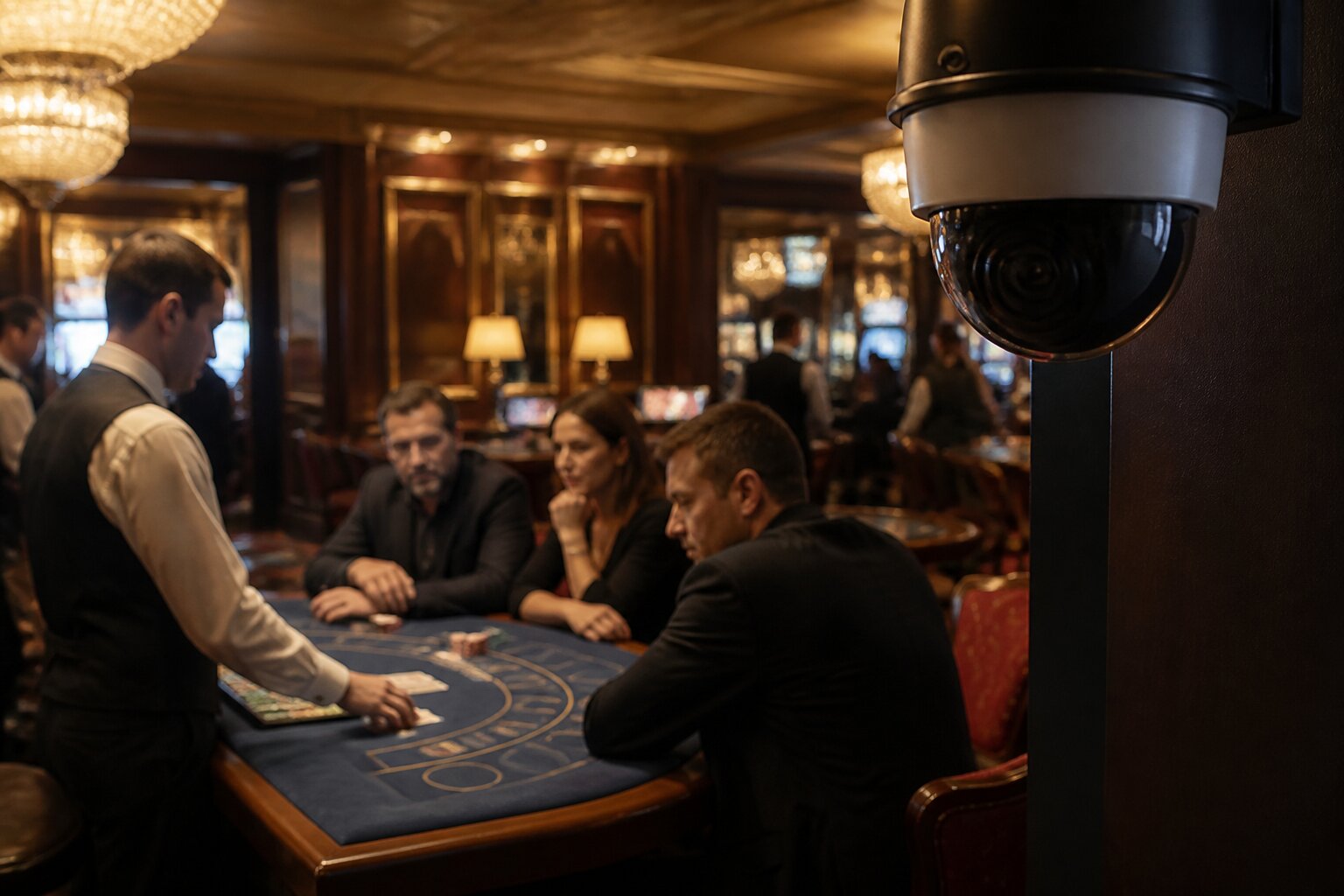
Ever wondered how casinos stay one step ahead of skilled players who use memory and observation to gain an edge? Casinos combine people, cameras and data to protect the integrity of their games.
What follows looks at the tools and techniques used to spot counting, how staff and systems work together, and the legal and ethical limits that shape their response. Read on to see how detection moves from a single table to a full investigation when concerns arise.
Understanding Card Counting: Why Do Casinos Care?
Card counting is a method some players use in games such as blackjack to keep track of which cards remain in play. By following the cards that have been dealt, a player forms a picture of whether the remaining deck is likely to produce strong hands, and adjusts betting and play accordingly. This relies on memory and observation rather than any external aid.
Casinos take an active interest in card counting because it can alter the intended balance of the game. Casino games are structured so the odds favour the house over time; when a player gains an edge through careful tracking, that balance shifts and the operator’s expected returns change. Protecting consistent rules and outcomes is important for the business and for other customers who expect fair play.
Operators are required to act within legal and regulatory frameworks while addressing any behaviour that affects fairness. This includes using proportionate detection methods and ensuring any action taken respects customer rights and privacy. With that in mind, the next section looks at the range of surveillance tools casinos use to monitor play.
Types of Surveillance Used by Casinos
Casinos rely on a mix of visible and behind-the-scenes technology, along with trained staff, to monitor games and spot irregularities. Closed-circuit television systems are a core element, providing continuous views of tables and surrounding areas so incidents can be reviewed in detail.
Beyond cameras, analytical software examines betting patterns and game flow to flag behaviour that falls outside normal ranges. For example, a system might highlight a player who repeatedly increases stakes only when certain cards are dealt. Some venues also use radio-frequency identification in cards or chips to track movements without interrupting play.
These technical measures are balanced with human oversight, and together they help maintain game integrity while meeting legal and regulatory obligations. With surveillance established, the next question is how people and machines compare when it comes to spotting subtle signs of counting.
Human Observation vs. Technology: What Works Best?
The human element remains vital. Dealers, table supervisors and pit bosses bring experience and context to what they see: gestures, small conversations and subtle timing cues that systems cannot easily interpret. A trained member of staff can make quick judgements about whether behaviour is merely eccentric or something worth investigating further.
Technology contributes speed and scale. Software can compare thousands of hands and bets across multiple tables, spotting statistical anomalies more quickly than any individual could. Tools such as facial recognition and automated data analysis help link activity across sessions and identify repeat patterns.
Each approach compensates for the other's limitations. People are adept at assessing intent and context; technology is consistent and tireless at processing large volumes of information. Combining both gives a clearer picture, and the following section considers the specific behaviours that draw attention at the table.
Signs That Raise Suspicion Among Casino Staff
Staff watch for a cluster of behaviours that may indicate systematic tracking of cards rather than ordinary play. These cues act as prompts to observe more closely rather than proof of wrongdoing.
Before listing common signs, it is useful to note that context matters: an isolated behaviour often has an innocent explanation, but repeated or concurrent signals may justify further review.
- Frequent changes in bet size: Repeated swings from low to high stakes aligned with card distribution can alert staff.
- Consistent higher-stake play after certain cards are shown: Increasing wagers when the deck appears favourable is a typical pattern to watch.
- Avoiding insurance bets: A player who systematically declines insurance in situations where the mathematics would normally suggest it might sometimes be following counting logic.
- Strong, sustained focus on the table: Intense attention to card flow, little table conversation and minimal distraction can look different from casual play.
- Team tactics: Coordinated behaviour between two or more players, such as signalling or staged entries and exits, is a recognised red flag.
When several of these signs appear together, staff may escalate observation. The next section explains how that escalation is supported by combined behavioural analysis and record-keeping.
Advanced Detection: Analysing Player Behaviour
Advanced detection moves beyond isolated observations to build a richer profile of play over time. Casinos draw on CCTV footage, betting logs and staff reports to spot persistent patterns and to distinguish skilled but legitimate play from attempts to gain an unfair advantage.
Surveillance teams aggregate data across shifts and tables, tracking how often a player wins, how their stakes vary, and whether similar patterns recur over weeks or months. This longitudinal view helps avoid hasty conclusions and focuses investigations where evidence accumulates.
At the same time, staff notes and shift reports add nuance. Written observations about table dynamics, partner changes or signalling behaviour are coupled with time-stamped footage and software alerts, forming a composite record that can be reviewed by management. With a thorough evidence base, casinos can move from suspicion to action in a measured way. The next subsections look at the specific roles involved in that process.
Table Monitors and Pit Bosses
Table monitors and pit bosses are central to day-to-day oversight. Their responsibilities extend beyond watching the cards; they monitor buy-ins, how players move between games, and any unusual interactions. Such staff often notice patterns that only become meaningful when tracked across multiple sessions.
When concerns arise, these supervisors make contemporaneous notes and flag recordings for review. Their documentation preserves context that raw data alone cannot provide, such as comments overheard or irregularities in how chips are handled. That human record plays an important part when decisions about a guest’s future play are considered.
Facial Recognition and Data Analysis
Technological tools bolster human records by linking incidents and providing quick cross-references. Facial recognition systems can help identify individuals who have previously been warned or excluded, while data analysis platforms model expected outcomes and highlight deviations.
When software flags a player, teams typically cross-check footage, betting histories and staff reports before any direct intervention occurs. This blended approach reduces error and helps ensure responses are proportionate. With solid evidence in hand, staff can then consider how best to engage the player, which is the focus of the next section.
How Are Card Counters Identified and Approached?
Identification usually follows a staged procedure that begins with monitoring and escalates only if patterns persist. Initial alerts from staff or systems prompt further observation, and investigations gather both video and betting records to see whether behaviour consistently matches known counting profiles.
If a clearer picture emerges, management may review additional sessions and consult experienced staff before approaching the player. When an approach is made, it is handled professionally and discreetly. Conversations are factual, explaining casino policies and the reasons for concern without making accusations. In many cases, a simple request not to play a particular game resolves the issue. More serious or repeated breaches can lead to exclusion.
Throughout this process, operators aim to balance enforcement with respect for guests. Procedures are designed to be fair, documented and consistent with regulatory expectations. That balance leads naturally into the legal and ethical framework that governs how casinos act.
Legal and Ethical Aspects of Card Counter Detection
Using memory and observation to track cards is not a criminal offence in itself under UK law, but the line is crossed if external devices are used or if players act in collusion to cheat. The Gambling Act 2005 and regulatory guidance set out clear limits on acceptable conduct and require operators to take reasonable steps to protect game integrity.
Casinos are permitted to refuse service or exclude players when there is credible evidence of behaviour that undermines fair play. Any action must be proportionate, documented and consistent with policy, and staff are expected to follow procedures that respect customer rights and privacy. Legal authorities may become involved if equipment or criminal cheating is alleged.
Ethically, operators must avoid prejudgement and ensure that measures against suspected counters are based on reliable evidence rather than hunches. Transparent record-keeping and staff training help maintain that standard. With these safeguards in place, casinos can protect fair play while treating customers with dignity.
This explains how detection, investigation and policy work together to preserve the integrity of table games while remaining within legal and ethical boundaries.
Play Online Casino Games at Cash Casino
We’d love to welcome you into our friendly community of players at Cash Casino. Experience the excitement of playing with us, where everyone is here to enjoy themselves.
**The information provided in this blog is intended for educational purposes and should not be construed as betting advice or a guarantee of success. Always gamble responsibly.