
Ever wondered whether a single number at the roulette table really matters? Lots of players ask that, from curious newcomers to those who’ve spent many nights watching wheels spin.
Roulette looks straightforward, yet the wheel and ball hide a few technical details that shape how the game works. Some numbers attract attention because of how the rules treat them; understanding why can change how you view the table.
If you want to know which number gets the most attention and why it matters to both players and casinos, keep reading — there’s more beneath the surface than the first glance suggests.
What Is Considered the Worst Number in Roulette?
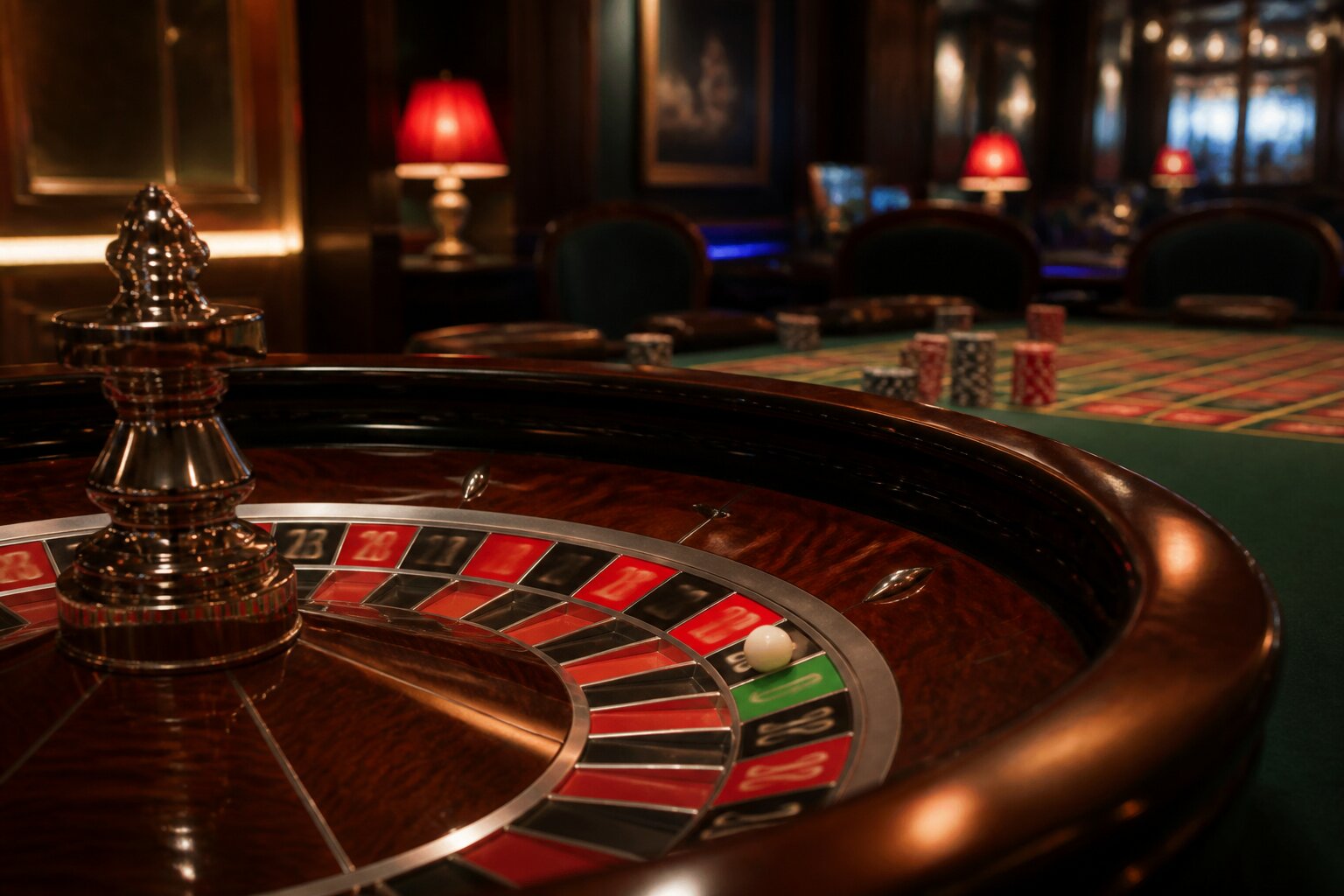
When people talk about the “worst number” they usually mean zero, shown as 0 on the wheel. European roulette has a single green zero; American roulette includes both 0 and a double zero, 00. Those pockets are separate from the red/black and odd/even layout that covers the other numbers.
Zero’s significance comes from how bets are paid. Many common wagers — the outside bets covering red/black, odd/even, or halves of the wheel — lose when the ball lands on zero because those bets don’t include it. That design creates the built-in advantage for the house. Historically, zero was introduced in the 19th century by wheel designers to ensure the game yielded a predictable edge for operators.
So while every pocket on a well-maintained wheel is physically equivalent, zero is the one that changes the payoff pattern of many bets. That’s why it tends to get the most attention from players and commentators.
Why Do Some Players Avoid Certain Numbers?
Players avoid numbers for a range of reasons. Personal associations — birthdays, anniversaries, or memorable dates — are common reasons to favour or skip a particular number. Others react to past experiences at the table: if someone has repeatedly lost on a number, they may prefer not to bet on it again.
Perception plays a big role. People are naturally inclined to find patterns in randomness, so a streak of a number appearing or not appearing can feel meaningful even when there’s no mathematical link. Those perceptions shape behaviour at the table and contribute to the social atmosphere of the game.
These choices are part of how people personalise their play. They don’t change the underlying probabilities, but they do influence how players experience each session.
Does the Worst Number Impact the Outcome of the Game?
Zero alters the outcome for many common bets because it sits outside the usual groupings on the layout; however, it does not change the fundamental fairness of a properly operated wheel. Each spin is an independent event governed by probability. No previous spin affects the next result.
Where zero matters is in expected return. Because it causes certain outside bets to lose, the presence of zero increases the mathematical advantage the casino holds compared with a hypothetical wheel that had no zero at all. That’s a structural feature of the game, not a sign that any given spin is more likely to favour a particular number.
So zero matters for how payouts and house edge are calculated, but it doesn’t exert any mysterious influence on where the ball will land next.
How Are Roulette Numbers Perceived by Regular Players?
Regular players often form habits around numbers. Some will always bet a personal number; others alternate between patterns they find satisfying. These habits contribute to the table’s culture — friendly debates about what pays off, small rituals and the shared language that develops among frequent players.
These perceptions also affect strategy choices. A player who prefers outside bets will feel zero more keenly than someone who only makes straight-up number bets, because zero changes the success rate of those outside wagers. Conversely, players focusing on individual numbers see the same payout odds regardless of which specific number they select.
Understanding how different bet types interact with the layout helps explain why players treat numbers differently, and why those choices become part of their routine.
Common Myths About Unlucky Numbers in Roulette
Stories about “unlucky” numbers circulate in every casino, but most of them don’t hold up to scrutiny. A fair wheel gives each pocket the same physical chance of being the final resting place for the ball, so claims that certain numbers are inherently worse aren’t supported by consistent evidence.
Some myths arise from observing short-term clusters of results — sequences that feel meaningful but are simply the kind of variation you expect from random events. Others come from anecdote or folklore passed between players. While entertaining, these narratives shouldn’t be mistaken for reliable strategy.
If a number seems to appear more often over a limited sample, the explanation is usually statistical fluctuation or, in rare cases, a mechanical fault. Serious concerns about wheel bias are addressed through maintenance and testing.
Myth-Busting: Are Any Numbers Truly Worse Than Others?
There is no reliable statistical proof that any number is consistently worse or better than another on a properly maintained wheel. Odds are determined by the wheel’s structure and the rules of the game, not by superstition or past outcomes.
When players attribute a pattern to a number, it usually reflects short-term variation or personal interpretation. Treat these stories as part of the game’s folklore rather than a basis for betting choices.
How Does the Roulette Wheel Design Influence Number Bias?
A wheel’s construction and upkeep are crucial to fairness. Professional-grade wheels are balanced and precisely machined so that each pocket is equally likely to capture the ball. In regulated environments, operators carry out routine checks and calibration to detect wear, loose pockets, or other issues that might produce bias.
If a mechanical bias does emerge, it tends to show up only after extended use and is detectable through statistical analysis of many spins. Licensed operators test and, when necessary, repair or replace wheels to preserve integrity. That routine oversight is what helps ensure play is fair and consistent over time.
Regulation and testing matter because they protect the mathematical design of the game: the physical uniformity of the wheel is what allows probability to be the true determinant of outcomes.
Does Casino Type Affect Number Outcomes?
The way results are generated differs between land-based and online play, but both formats are designed to deliver fair outcomes.
In physical casinos, the result comes from the actual wheel and ball. Regular inspection of equipment and trained personnel help maintain neutrality. Online, results are produced by Random Number Generators (RNGs) programmed to emulate the probabilities of a real wheel. Independent testing bodies audit these systems to verify that outcomes match expected statistical distributions.
Both environments aim to ensure that each number is equally likely on any given spin. The checks are simply tailored to the medium: mechanical and procedural for live play, and software and statistical auditing for online play.
The Role of Probability in Roulette Number Outcomes
Probability explains everything about roulette outcomes. In European roulette, for example, one straight-up number has a 1 in 37 chance on any spin; in American roulette it’s 1 in 38 because of the extra double zero. Those ratios are fixed by how many pockets exist, and they don’t change based on what happened before.
That fixed structure determines expected returns for each bet type and sets the house edge. Understanding these ratios clarifies why certain bets pay more than others: larger payouts correspond to outcomes that occur less often, and vice versa.
Probability also shows why strategies that claim to overcome the house edge by tracking previous results don’t work: each spin is independent, and the mathematical expectation remains constant over time.
Should You Avoid the So-Called Worst Number?
Deciding whether to bet on or avoid zero is a personal choice tied to how you enjoy the game and which bets you prefer. Zero affects outside bets by design, but it doesn’t change the fairness of a properly run game.
Play for Enjoyment, Not Expectation
Choose numbers and bet types that match the experience you want at the table. Some players favour straight-up numbers for the higher payouts, while others prefer the steadier results of outside bets. Know the odds associated with each choice and let that information guide your play, rather than stories about particular numbers.
Keep It Balanced
Set limits you’re comfortable with and play within them. If the game stops feeling enjoyable, it’s sensible to take a break or reassess how you’re playing. Support and tools are available if you ever want help managing how much time or money you spend on gambling.
Whether you avoid zero or embrace it as part of the game, understanding what it does to payouts and why it exists will help you make clearer choices at the table and make the experience more enjoyable overall.
**The information provided in this blog is intended for educational purposes and should not be construed as betting advice or a guarantee of success. Always gamble responsibly.