
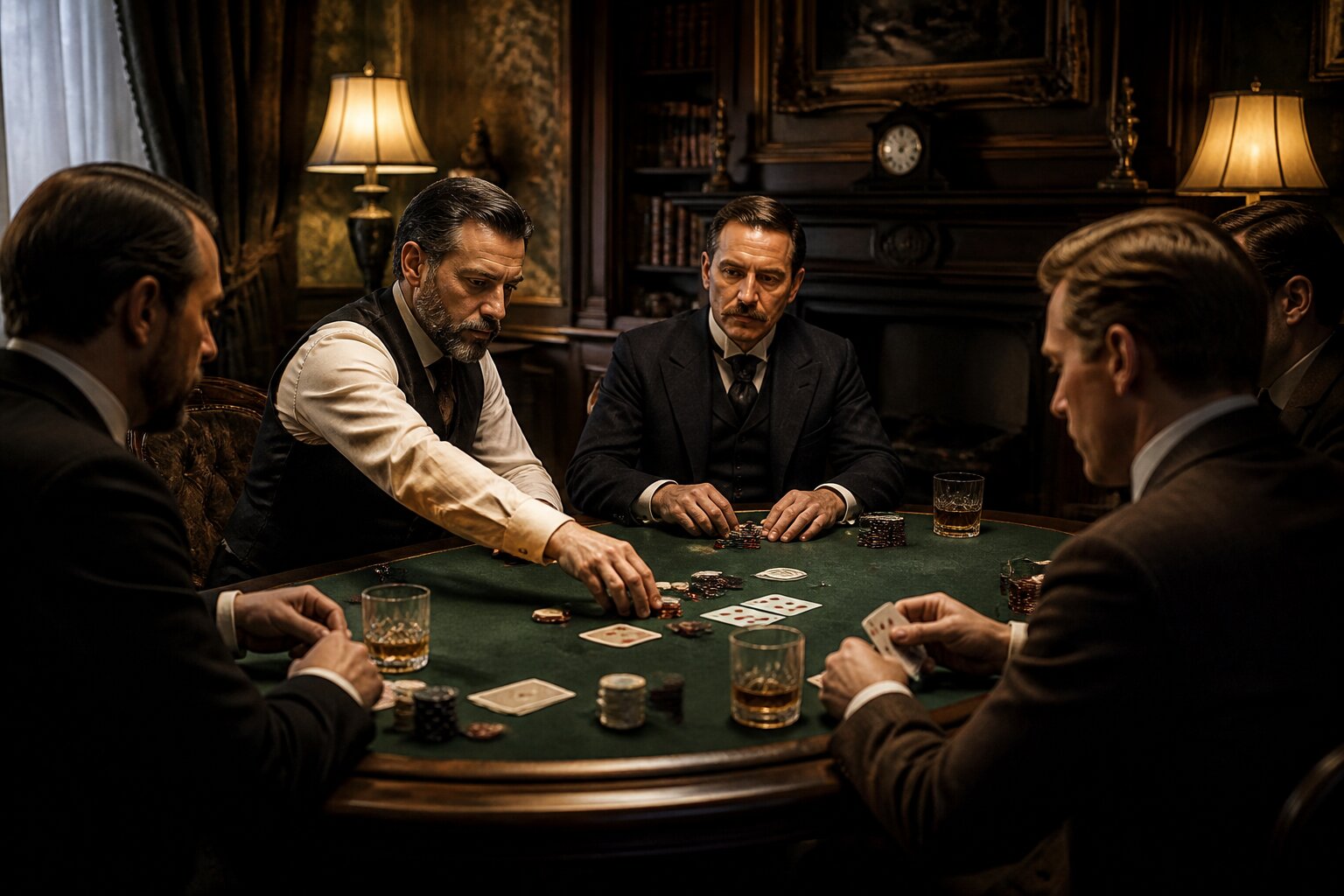
Poker is one of the world’s most played card games, enjoyed in homes, clubs and casinos. But where did it begin, and how did it take the shape we recognise today?
The story is not a single origin tale but a long, international journey. Ancient games, shifting rules and social change all fed into poker’s development, creating a game that has kept evolving ever since.
If you want a clear view of how poker emerged, how early hands were played and why certain features exist today, this article will guide you through the key moments and influences. Read on to discover how many strands of history came together to form modern poker.
What Are the Earliest Games That Inspired Poker?
Poker grew from a number of older card games rather than springing from one inventor. Three of these predecessors stand out for the features they passed on.
French poque, played in the 17th and 18th centuries, emphasised bluffing and betting, traits that would become central to poker. German pochen shared the same root and also involved wagering against opponents rather than the house. From Persia, the game as nas contributed structured betting rounds and distinct hand types.
Each of these games introduced important building blocks: competitive betting, the idea that players could mislead opponents, and evolving hand values. As these elements travelled and mixed, they provided the raw material that later players reshaped into the modern game.
How Did Poker Evolve Into Its Modern Form?
The transformation into the poker most people know happened gradually, especially in the 19th century. When versions of poque arrived in North America, they adapted to local contexts and new player preferences. Early games used smaller decks and simpler hand rankings; as the game spread, the full 52-card deck and more complex hands became standard.
New variants appeared as rules were tinkered with: draw poker, stud poker and later community-card games added fresh strategic layers. The addition of hand types such as straights and flushes broadened the tactical choices players faced. By the 20th century, organised rooms and formal rules helped standardise play, while televised events and later online platforms spread particular formats—like Texas Hold’em—around the world.
These shifts show how poker’s rules and formats evolved in response to players’ tastes and wider social changes, rather than being fixed by a single designer.
Was Poker Created in Britain or Elsewhere?
Although Britain has a long card-playing tradition, poker’s direct ancestors trace to continental Europe and further afield. The early games that fed into poker—poque, pochen and as nas—originated outside Britain, and the earliest recorded games called “poker” took shape in North America during the 19th century.
Those American games incorporated European ideas but developed distinct features at home, especially along river routes and frontier settlements. Britain later adopted and adapted poker like many other countries, but it was not the initial creative centre for the game we now play.
Knowing this highlights poker’s international roots and the cross‑cultural exchange that shaped it.
How Was the First Poker Game Played?
The earliest documented poker games differ noticeably from contemporary play. In several 19th‑century accounts, players used a reduced deck—often 20 cards—and dealt five to each participant. There were no community cards and, in many early forms, no option to redraw: the hand you received was the one you had to work with.
Betting rounds were already central, with wagers reflecting assessments of hand strength and opponents’ behaviour. Early hand rankings were simpler; combinations such as pairs and three-of-a-kind mattered most, while straights and flushes arrived as later refinements. These formative rules left room for strategic decisions about betting patterns and reading opponents, which remain core to poker today.
The first games were therefore less about complicated rule sets and more about interaction: how players judged one another, how they structured wagers and how small changes to the deck or ranking could alter the game’s balance.
How Did Poker Spread Internationally?
Poker’s spread followed patterns of movement: trade routes, migration and entertainment networks carried the game beyond its early American heartlands. Riverboats, military units and travelling workers introduced poker to new communities, where local players adjusted rules to suit social contexts and table sizes.
As travel increased and the 20th century brought organised casinos, radio and television, poker’s reach broadened further. International tournaments and later internet play created standard formats that could be learned and practised worldwide, helping to create a shared culture of play even as regional variants persisted.
This global circulation meant rules and fashions travelled fast, so a popular version in one place could quickly gain traction elsewhere while still being adapted by local players.
Common Myths About the Invention of Poker
Several misconceptions persist about poker’s origins. One is that it was invented in a single place at a precise moment. In truth, poker emerged from a blend of older games and gradually changing rules across different regions.
Another myth is that poker comes directly from one European country; while Europe supplied important influences, the contemporary form took shape largely through developments in North America. It’s also incorrect to assume poker has remained unchanged—hand rankings, deck sizes and betting structures evolved substantially over time.
Finally, some think poker reliably produces predictable returns. Outcomes are never certain, and success depends on a mix of skill, strategy and variable factors. Keeping play controlled and within set limits remains important.
Why Does the Origin of Poker Matter Today?
Tracing poker’s history helps us appreciate why the game has so many versions and why certain rules feel natural. The various cultural inputs explain the balance between betting, hand structure and psychological play. That background also clarifies why modern poker places such emphasis on clear rules and fair play: standardisation grew out of the need to resolve disputes and make competition consistent as the game spread.
Knowing this heritage deepens respect for different formats and reminds players that poker has always been adaptable. It also reinforces the importance of playing within established rules and using regulated, trustworthy venues so the game can remain enjoyable and safe for everyone.
If you’re exploring different poker formats or deciding where to play, choose reputable operators and set limits to make sure your experience stays positive and under control.
This overview shows poker to be a long, international conversation across time—one that transformed simple betting games into the complex, strategic activity enjoyed today.
**The information provided in this blog is intended for educational purposes and should not be construed as betting advice or a guarantee of success. Always gamble responsibly.