
Blackjack, also called 21, is one of the world’s best-known card games. It’s played in casinos and online, and its straightforward aim makes it instantly engaging.
The game’s history is a patchwork of cultures and centuries. Read on to follow how earlier card games fed into the rules we recognise today, how the name “blackjack” came about, and why no single person can be named its inventor.
What Are the Earliest Forms of Blackjack?
The earliest ancestors of modern blackjack date back to 16th- and 17th-century Europe, where several regional games shared the basic idea of reaching a target total without going over.
In France, Vingt-et-Un (“twenty-one”) became widely played among the upper classes and in gambling houses. Spanish players enjoyed Veintiuna, a version with its own local rules and a Spanish deck that often omitted tens. Italy contributed Sette e Mezzo (“Seven and a Half”), a banking game where card values and the risk of exceeding a limit shaped play.
These games emphasised a balance between risk and reward — a central theme that survives in blackjack today. As players and rules moved between countries, each region added small changes, producing a set of related games rather than a single, fixed form.
This gradual blending across borders set the scene for the game’s later development in the Americas.
How Did Blackjack Get Its Name?
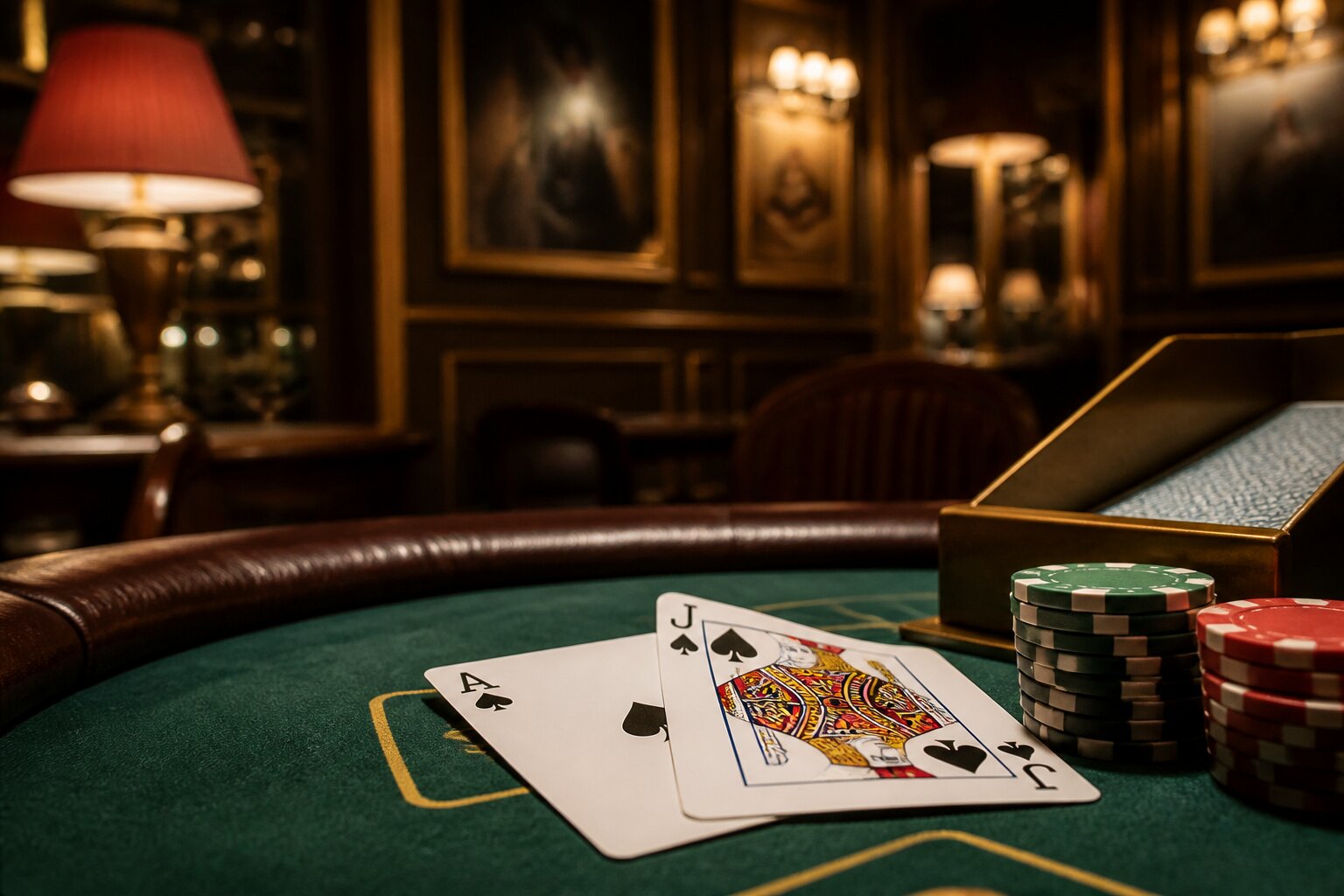
When the game reached North America in the 19th century, casinos introduced promotions to attract players. One of these bonuses paid extra if a player’s first two cards were an ace of spades and a black jack. That promotion was called “blackjack,” and the name became widely used even after the special payout disappeared.
The label stuck because it was memorable and helped the game stand out among other table games. Over time, “blackjack” replaced older names such as “twenty-one,” and the term spread around the world along with the game itself.
This example shows how a small commercial tweak in casinos can leave a lasting linguistic mark on a game’s history.
Who Is Credited as the Creator of the 21 Game?
There is no single inventor of 21. Historians trace the game’s roots through a number of related European games, but surviving records do not point to one individual who devised it.
Vingt-et-Un is among the earliest versions described in writing, with references appearing in French sources from the 1700s. Earlier literary mentions, such as a Spanish reference in the early 1600s, show similar games were already in circulation, but they too lack an identifiable creator. Instead, the game evolved through local play, house rules and gradual standardisation.
Understanding blackjack as the product of cultural exchange helps explain why its rules vary in different places and why no single name appears in its origin story.
Influences From Other Card Games
Blackjack absorbed ideas from several older games, each contributing particular mechanics or conventions.
Veintiuna and Vingt-et-Un brought the central target of reaching twenty-one, though their card values and play styles differed. Sette e Mezzo emphasised a fixed target with a banking structure, introducing the element of betting against a holder of the bank. Other games such as Chemin de Fer showed forms of dealer-versus-player play and decision-making based on visible cards.
Taken together, these predecessors supplied the building blocks — card values, betting structures and player choices — that coalesced into the modern game. Seeing those influences side by side makes it clearer how blackjack’s mechanics developed piece by piece.
Now that we’ve covered those roots, it’s useful to look at how the game spread more widely.
How Did Blackjack Spread Across the World?
From its European origins, 21 travelled with settlers and merchants to North America, where it adapted to local tastes in the 19th century. The game became part of the gambling scene as betting houses and riverboat casinos put their own spin on rules.
In the 20th century, established casinos in places such as Las Vegas refined and popularised a version closer to what players now recognise. Later still, the internet brought blackjack to a global audience through online casinos and live-dealer tables, allowing people in many countries to play familiar or regional variants.
Throughout these shifts, legal age restrictions and regulatory frameworks developed in each jurisdiction. In the UK and elsewhere, rules exist to protect players and set minimum ages for participation.
Popular Myths About Blackjack’s Invention
Several myths surround blackjack’s past, and sorting fact from fiction helps clarify the game’s true history.
One persistent story claims a famous gambler or single genius invented blackjack. In reality, historical evidence points to gradual evolution across multiple cultures and decades. Another misconception is that the game’s rules have always been fixed; in truth, rules shifted often, depending on location and house preferences.
Some accounts suggest secret strategies or rituals can reliably influence outcomes. Authorities and researchers stress that outcomes are determined by the way cards are dealt and shuffled, and that no superstition replaces sound play or proper rule knowledge.
Clearing up these myths makes it easier to appreciate blackjack for what it is: a game with a long, collective history rather than a single point of origin.
The Modern Game of Blackjack: How Did It Evolve?
As casinos formalised play, a number of standard features emerged. Multiple decks became common to reduce predictability, the dealer’s face-down card (the hole card) was introduced in some variants, and player options such as hit, stand, split and double down were standardised.
Side bets and insurance options arrived later, offering extra ways to wager while keeping the core objective unchanged: achieve a better hand than the dealer without exceeding the target total. The balance between house rules and player decisions shaped strategies and encouraged the development of basic strategy charts and card-counting approaches among mathematically minded players.
Online platforms then added further variation, including live-dealer formats that try to reproduce the social feel of a casino table, while also preserving the central rules players expect.
Why Does Blackjack Remain So Popular Today?
Blackjack’s enduring popularity comes from a mixture of clarity, interaction and pace.
Easy to learn, the game’s basic objective is straightforward and newcomers can feel comfortable after a short time. That accessibility is matched by social elements: table play encourages conversation and a shared experience with other players and the dealer.
The game’s tempo is brisk, with each round resolving quickly and keeping the action moving. That suits players who prefer a lively table rather than long waits.
Finally, most players value having clear rules and a sense that decisions matter. While the exact rewards vary by rule set, the combination of understandable mechanics, social play and steady action helps explain why blackjack remains a staple in casinos and online.
Always make sure you follow local regulations and play within your limits; gambling is for adults only.
**The information provided in this blog is intended for educational purposes and should not be construed as betting advice or a guarantee of success. Always gamble responsibly.