
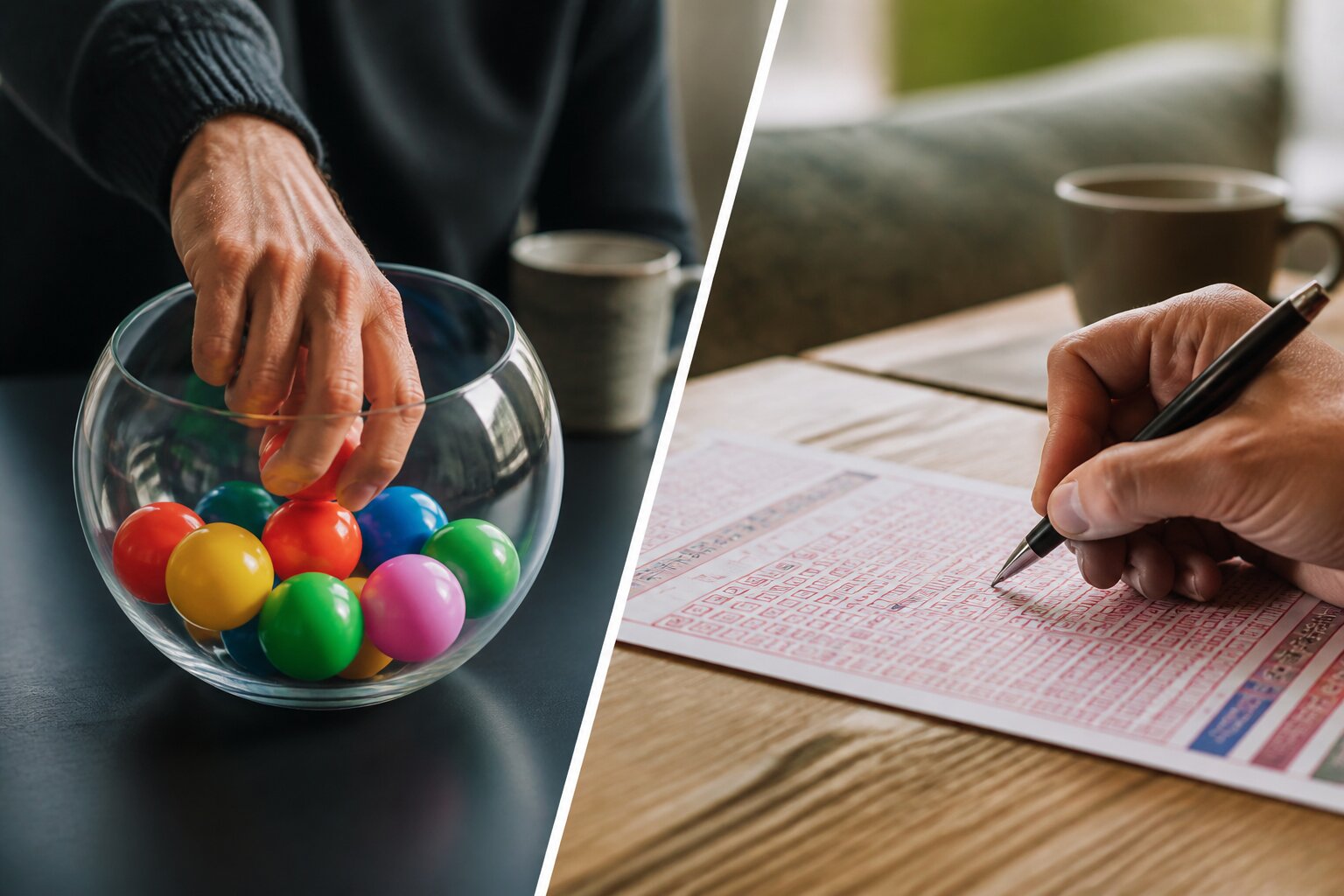
Everyone dreams of hitting a life-changing jackpot, but when it comes to choosing your lottery numbers, what approach makes the most sense?
Some people use memorable dates and personally meaningful digits, while others let the Lucky Dip generate a set automatically. This article unpicks how both methods work, what the evidence shows about winning outcomes, and the reasons players favour one method over the other.
Read on to understand the facts so you can choose the approach that suits you best.
How Do Lucky Dip and Own Numbers Work?
There are two common ways to submit a line in UK draws: use the Lucky Dip to have numbers generated automatically, or pick your own numbers and enter them manually. When the Lucky Dip is used, the terminal or website produces a random combination at the point of purchase. Choosing your own numbers means entering them on a playslip in a shop or selecting them on an app or website.
Each ticket line costs the same and is entered into the draw under the same conditions. The draw itself is an independent process run under strict procedures and independent verification, so the method of selecting numbers does not affect how the draw is conducted. Understanding this distinction—between how numbers are chosen and how draws are made—helps clarify why selection method does not change the odds. Next, we’ll look at what the recorded results show in practice.
Do Lucky Dip Numbers Win More Often Than Self-Picked Numbers?
Data from national draws does not support the idea that one method leads to more wins. Operator records typically show that roughly half of winners used randomly generated entries and about half used self-chosen numbers, reflecting the distribution of how people play rather than any advantage for either approach.
The important point is that every draw is independent and audited to ensure each number has an equal chance of being selected. Whether a line was produced by a terminal or chosen by a player makes no difference to its probability. With the statistical picture in mind, it’s worth considering some common beliefs about number patterns and whether past outcomes influence future draws.
Analysing National Lottery Draw Statistics
When statisticians examine draw histories, patterns that look meaningful almost always fall within the range of random variation. A number appearing frequently over a particular stretch is not evidence that it will continue to appear; each draw is a separate event with the same probabilities for every number.
This statistical reality is reinforced by the procedures used to run and verify draws, which are designed to prevent bias. With that settled, the next question many players ask is whether focusing on certain numbers or avoiding others has any psychological or behavioural benefit — and that’s what the next section explores.
Are Hot or Cold Numbers a Factor?
Talk of “hot” or “cold” numbers stems from an attempt to find patterns in past results, but it doesn’t change the mathematics of the draw. A number’s history does not alter its probability in a subsequent draw, because each draw is independent and conducted under strict controls.
Where perceived patterns do influence behaviour is in how people select numbers. If many players favour dates within a limited range, for example, choosing a less common combination can slightly reduce the chance of sharing a prize if you win. That is a strategic consideration about prize division rather than a way to increase the chance of winning. Having explored statistical realities and strategic angles, it helps to look at why different players prefer one method over the other.
Psychological Factors: Why Do Players Choose One Over the Other?
Personal preference, convenience and ritual often drive the choice between automated and self-picked numbers. Selecting your own digits gives a sense of involvement and makes the ticket feel personal, while letting the Lucky Dip decide removes the need to choose and speeds up the purchase process.
These motivations are psychological rather than probabilistic: they affect how people feel about playing but not the outcome of draws. Players who enjoy the act of picking numbers value the experience itself; those who prefer a hands-off approach value simplicity. Either way, setting limits and treating play as entertainment helps keep the experience positive. With motivations understood, it’s useful to address the common misconceptions that circulate among players.
Common Myths About Lucky Dip and Chosen Numbers
Several myths persist around number selection, such as the idea that particular sequences, dates or methods reliably improve one’s chances. In practice, no selection habit can alter the mathematically determined odds of a random draw. Claims that switching methods, avoiding certain number groups, or following so‑called systems will guarantee success are unsupported by evidence.
Myths often persist because humans look for patterns in randomness. Recognising that these beliefs are psychological shortcuts rather than factual improvements helps players make clearer choices about how they want to play. Having cleared up misconceptions, the next section summarises what really matters when choosing a method.
Does It Matter How You Pick Your Lottery Numbers?
From a practical standpoint, the method of selection does not affect the odds of winning. Both randomly generated lines and self-picked numbers are equally eligible in every draw because the draw process itself is neutral and independently verified.
What does matter is how the experience fits into a person’s life. If choosing numbers enhances enjoyment, that is a valid reason to do so; if convenience is more important, automated selection is a sensible option. Either way, keeping play within set limits ensures it remains an entertaining pastime. Finally, we bring this together to help you decide which approach suits you.
Which Method Should You Choose?
The best choice is the one that aligns with personal preference and responsible play. Some people enjoy the ritual of choosing numbers and the sense of connection that brings, while others prefer the speed and simplicity of an automatically generated line. Both options are fair and equally likely to be drawn.
Think about what makes the experience enjoyable for you and choose accordingly. If avoiding shared prizes is a consideration, selecting less common number ranges can reduce the chance of splitting a win, though it does not change the odds of winning itself. Whichever route you take, set a budget, stick to it, and treat playing as entertainment. If you’d like, we can show popular ways to manage play responsibly on this site and how to set spend limits to suit your preferences.
**The information provided in this blog is intended for educational purposes and should not be construed as betting advice or a guarantee of success. Always gamble responsibly.