
Imagine stepping through grand double doors, greeted by the buzz of anticipation and swirling cigarette smoke, where fortunes could change with the turn of a card or the spin of a wheel. Britain’s first legal casino wasn’t hidden away in the shadows, it stood in the heart of London and opened up a world previously reserved for private clubs and whispers behind closed doors.
Was it all glamour, or did a strict set of rules govern the fun? The real story of the UK’s first legal casino is practical and peppered with quirky details. From velvet ropes to roulette tables, licensing checks to polite croupiers, the venue marked a clear change in how gambling was treated socially and legally.
What made this place legal, and what could visitors actually do once inside? The answers show how law and social expectations combined to create a new kind of night out on the town.
Origins of the UK’s First Legal Casino
Gambling has long had a curious place in British life, with betting shops and private card games operating for centuries. Until the early 1960s, however, casinos as public venues were effectively banned, and those who wanted a more formal experience often had to rely on private members’ clubs operating in a grey area.
The turning point came with the Betting and Gaming Act 1960, brought in to give oversight to an activity that was flourishing without accountability. Lawmakers aimed to tackle criminal influence and lack of transparency, making it easier to protect players and manage the industry. The Act did not seek to promote gambling, but to control it, setting out who could run venues and how they must be operated.
By formalising licensing and standards, the Act encouraged operators who could demonstrate probity and a commitment to public safety. This legal shift paved the way for a new type of leisure venue, one that operated openly under rules rather than in secret.
Why Was the Casino Made Legal?
Bringing casinos into the regulated sphere was a response to the reality that gambling was already widespread. Unregulated rooms had become difficult to police and were vulnerable to exploitation. Legalising certain venues meant authorities could require checks on ownership, insist on trained staff, and demand clear records of transactions.
Licensing criteria focused on excluding criminal influence and ensuring financial probity. Local authorities were empowered to refuse applications where concerns existed. The rules covered everything from the conduct of games to staff responsibilities, creating a framework intended to make gambling safer for adults who chose to participate.
This legal foundation also established expectations about how venues should present themselves to the public, influencing choices about location and appearance as operators aimed to meet regulatory and social standards. That attention to presentation is what led operators to seek premises that would reassure both officials and patrons.
Location and Opening: Where Did It All Begin?
The UK’s first legal casino opened in London, a city already associated with evening entertainment and a growing leisure scene of the early 1960s. The Casino Club in Mayfair was among the earliest venues to welcome guests following the new legal framework.
Mayfair’s associations with exclusivity and established clubs made it a logical choice, offering an address that reassured both regulators and an affluent clientele. Soon after, venues such as the Clermont Club also emerged nearby, attracting well-known faces from politics, arts and business. Those early sites helped define how a regulated casino should look and behave: orderly, supervised and respectable.
Locating in the West End also made the venues accessible to visitors and linked them to other elements of city leisure. The next section looks at what visitors actually encountered inside these settings.
What Guests Experienced Inside
Visiting one of the first legal casinos offered an experience that mixed careful organisation with the sort of social grace expected in Mayfair. The emphasis was on a controlled, elegant atmosphere rather than anything sensational. Staff, layout and décor all worked together to provide a reassuring and enjoyable environment for adults.
Layout and Interior Design
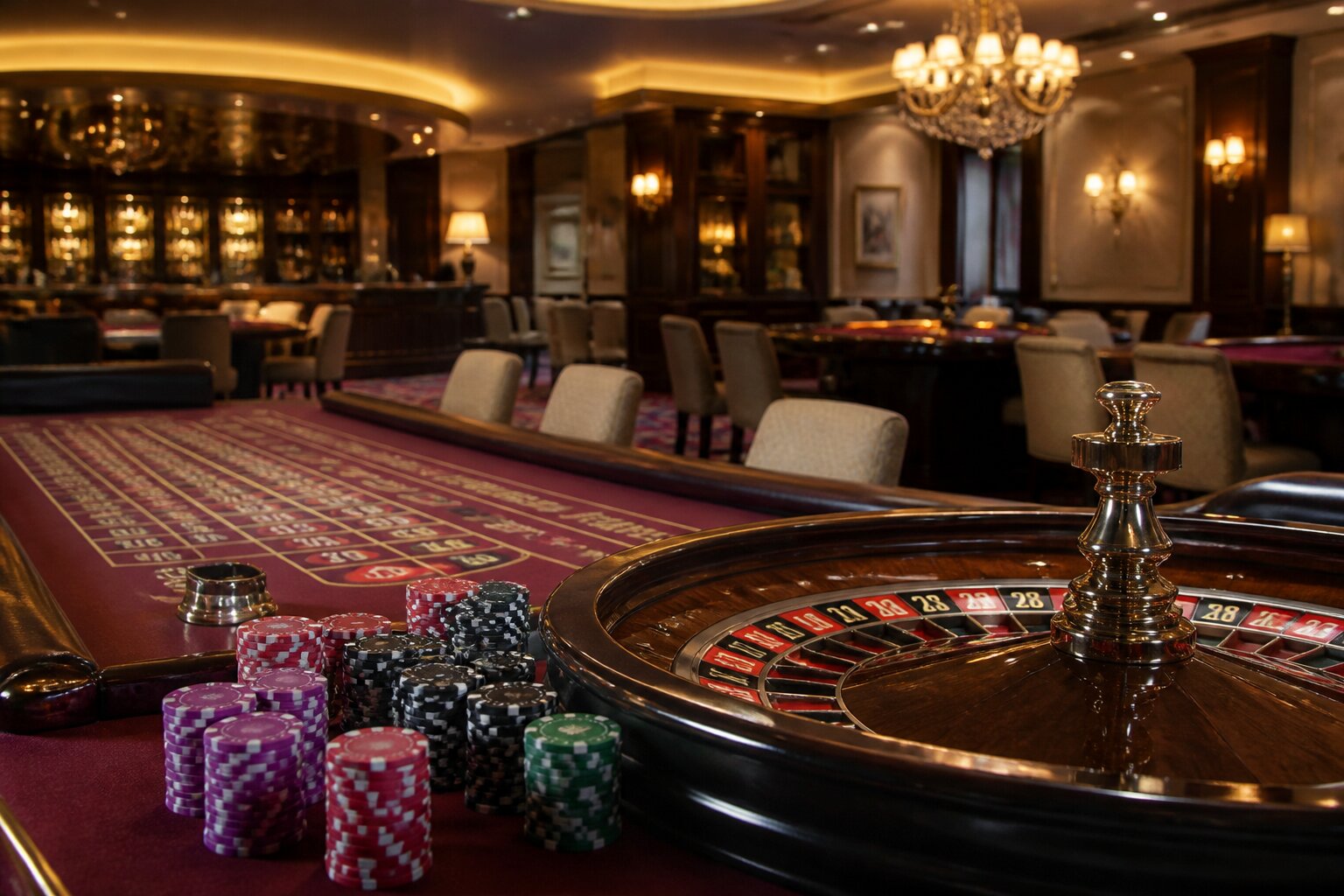
Guests entered spacious gaming halls arranged with clear sightlines so supervisors could oversee play. Tables for roulette, blackjack and poker were distributed across the main floor, while private rooms catered for higher-stakes play and offered additional discretion without removing oversight. Furnishings tended toward deep colours, heavy curtains and substantial lighting, creating a comfortable but well-ordered setting.
Lounge areas provided places to rest between games or meet friends, reinforcing the social aspect of a night out. Overall, the design favoured calm and dignity, a deliberate move away from the dim backroom image associated with illegal gambling.
Games and Entertainment on Offer
The core attractions were traditional table games, with roulette, blackjack, baccarat and stud poker commonly available. Rules were displayed and croupiers explained play when needed, helping newcomers follow procedures and keeping games brisk. Entertainment beyond gaming was modest, often limited to background music or a pianist, supporting conversation and a relaxed pace rather than loud spectacle.
After taking in the layout and games, many guests moved on to the food and drink options that rounded out the evening.
Dining, Bars, and Social Spaces
Early casinos included bars and dining areas designed for comfort and conversation. Menus usually combined continental dishes with British classics, presented in a simple, neat style rather than as haute cuisine. Drinks ranged from wine and spirits to soft options, served in well-lit areas near the gaming floor so guests could easily switch between socialising and play.
These social spaces encouraged breaks and interaction, reinforcing a paced experience rather than continuous play. Staff were trained to be attentive to behaviour and could intervene if someone appeared distressed, a practical measure intended to protect wellbeing and meet regulatory expectations.
Who Visited and Who Was Allowed Entry?
Entry was carefully controlled to maintain safety and the venue’s standing. Only adults aged 18 and over were permitted, with identification checks used to prevent underage access. Many venues operated on a membership basis, with applications, references or waiting periods forming part of the vetting process.
Dress codes enforced a formal standard, reflecting the image operators wanted to present. Regular visitors included businesspeople, locals with means, travellers and public figures. Security staff and doormen managed arrivals, ensuring only approved guests entered and helping to preserve a civil atmosphere inside.
The selective approach to admission helped create the environment regulators were looking for, and it also influenced how casinos were run behind the scenes.
Regulation and How the Casino Was Run
Running a licensed casino required adherence to detailed rules that covered ownership, staffing and daily operations. Licence applications were scrutinised for financial soundness and links to criminal activity, and owners had to show they could run a business to high standards.
Staff training was comprehensive, covering game procedures and the ability to recognise problematic behaviour. Gaming equipment was regularly inspected to guard against tampering, and venues kept detailed records of transactions so auditors could verify compliance. Surveillance and floor supervision helped prevent misconduct and ensured fairness in play.
Player protection measures were part of normal operations: staff monitored behaviour, information about setting limits was available, and self-exclusion options existed for those who needed them. The operational emphasis was on transparency and accountability, forming practices that future venues would adopt and refine.
The next section explains how these early practices shaped the wider industry in Britain.
Influence on Future Casinos in the UK
The standards set by the first legal casinos became a template for later venues across the country. Licensing protocols, membership procedures and the requirement for clear financial records influenced the shape of regulation in subsequent decades. Layouts that balanced open play with supervised private rooms became common, and staff professionalism came to be expected.
Measures intended to protect players, such as monitoring for signs of harm and offering ways to step away from play, entered mainstream practice and were expanded in later regulatory frameworks. The professionalism and record-keeping introduced early on informed the approach to both land-based and, later, online gambling operations, always with an emphasis on safety and oversight.
These developments show how one landmark change in law and practice rippled outwards to shape an entire sector.
The Bottom Line: Early UK Casinos and Their Lasting Impact
The arrival of legal casinos in Britain did more than offer a new leisure option; it established a framework that prioritised transparency, fairness and player protection. Licensing, staff training and strict operational rules created venues that were accountable and safe for adults choosing to participate.
The practices pioneered by early casinos influenced regulation and industry standards for decades, embedding protections that remain central today. Enjoying a casino is a form of entertainment that works best when people set limits and stay mindful of their spending. Keeping play within clear boundaries helps preserve the experience as something enjoyable and under conscious control.
**The information provided in this blog is intended for educational purposes and should not be construed as betting advice or a guarantee of success. Always gamble responsibly.