
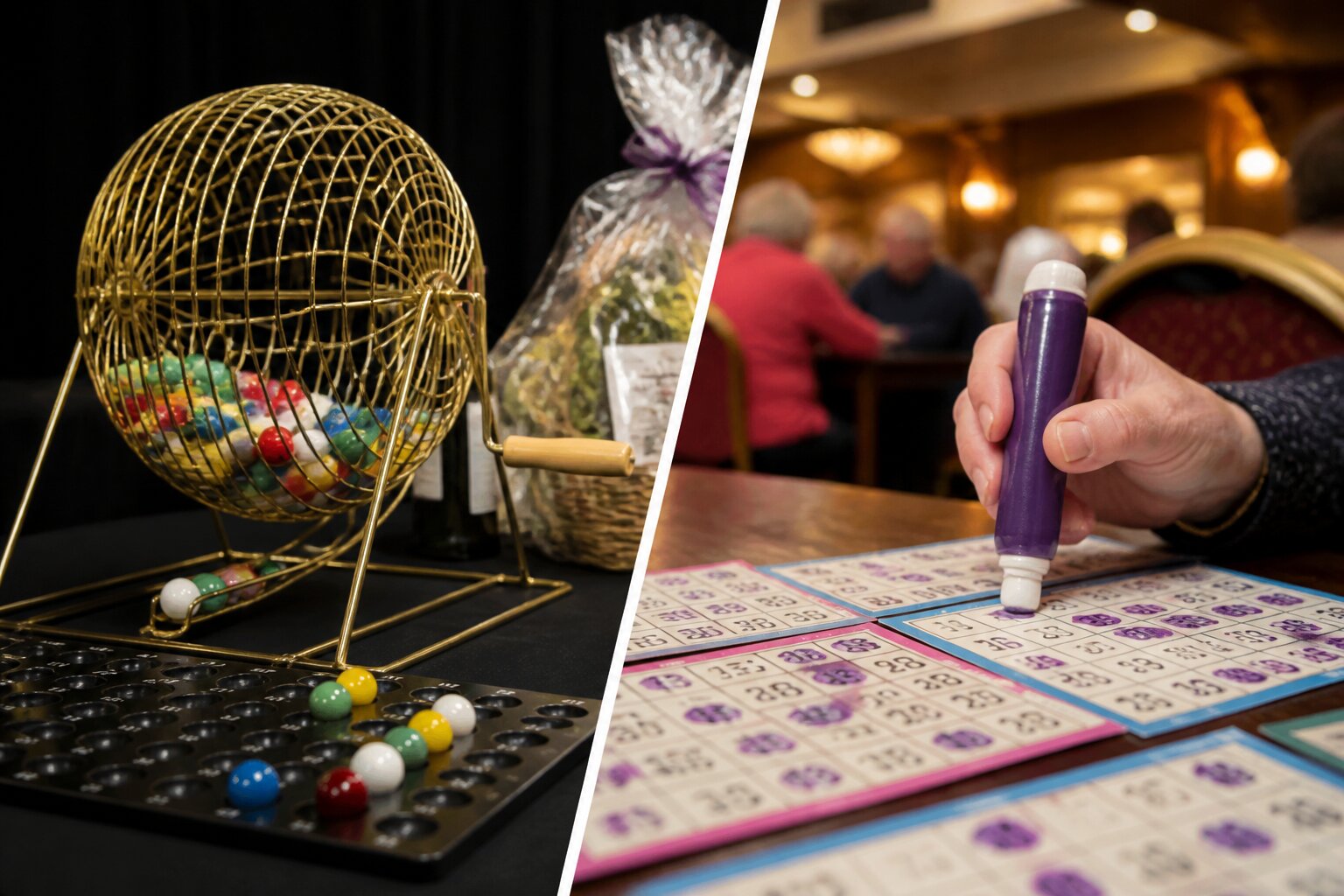
If you’ve ever wondered whether tombola and bingo are really the same, you’re in the right place. Both games have long ties to UK social life, but they use different formats and appear in different settings, so understanding those differences helps you choose what you’ll enjoy most.
This guide explains how each game works, how UK rules apply, the main game types you’ll see, and practical points to consider before you play.
What Is the Difference Between Tombola and Bingo?
Tombola and bingo share a simple idea—numbers are drawn and players win when those numbers match—but they feel quite different in practice.
Tombola normally appears at charity stalls, school fetes and local events. Players buy single tickets with a number; winning numbers are drawn from a drum or box and matched to prizes. There’s no card to complete, so the experience is quick and straightforward.
Bingo uses cards or tickets with grids of numbers. Numbers are called one by one, and players mark matches with the aim of completing a particular pattern such as a single line or a full house. The pattern-driven play, especially in 90-ball bingo common in the UK, tends to create a more communal, paced experience.
Both are games of chance and, when operated commercially, must meet regulatory standards. Which one suits you often comes down to whether you prefer a short, raffle-like draw or a longer, pattern-focused session.
How Do UK Tombola and Bingo Rules Compare?
When played commercially, both games fall under UK gambling law and need to meet the regulator’s requirements. This includes licensing, age verification, technical fairness and customer protection measures.
Tombola run purely as small-scale fundraising at community events is usually treated differently from commercial operations; it can operate under specific exemptions or low-value permissions when prizes and stakes are limited and proceeds go to charity. However, any commercial online or public tombola must comply with the same regulatory framework as bingo.
A single clear rule applies across both contexts: only those aged 18 and over may take part for money or prize value. Operators must ensure secure systems, fair draws and tools that help players control their play.
With those basics in place, you can enjoy either game knowing the framework is there to protect participants.
Traditional Bingo Games Explained
Bingo in the UK is commonly found in two main formats: 90-ball and 75-ball.
90-ball bingo is the British staple. Cards have three rows and nine columns, and numbers are drawn from 1 to 90. Prizes are usually awarded for one line, two lines and a full house, giving several points in a single session where players can win at different stages.
75-ball bingo, more common in North America, uses a 5x5 grid and focuses on completing specific patterns—lines, corners or shapes—rather than staged wins. Many UK online operators include 75-ball rooms to widen player choice.
Both formats rely on certified random draws and standardised cards. The core appeal is the mix of anticipation and social interaction, whether played in a hall or online.
Tombola Game Types in the UK
Tombola appears in a variety of forms, from simple charity stalls to regulated online draws. Each variation keeps the same basic method—tickets with numbers are drawn and matched to prizes—but the setting and prizes change the atmosphere.
Common tombola types include:
- Classic tombola draw: Numbered tickets are bought and placed in a drum; winners are announced and collect a prize. This is the familiar stall at fetes and community events.
- Raffle-style tombola: Tickets are drawn for multiple prizes, sometimes in successive rounds, which can keep interest high at larger events.
- Themed tombolas: Bottle tombolas, chocolate tombolas or toy tombolas link winning numbers to a specific prize category, which can be easier to organise and appeal to different audiences.
When registered and run online, tombola uses automated draws and certified systems to ensure fairness. For live events, organisers follow local rules about prize values and advertising to remain within permitted frameworks.
How Does Online Tombola Work?
Online tombola mirrors the offline process but in a digital environment. Licensed operators provide electronic tickets, automated random draws and immediate crediting of prizes. Players register with verified identity, and systems log and audit draws to maintain integrity.
Because the mechanics are the same, the key differences are convenience and speed: online draws can be instant and operate round the clock, while physical tombolas are tied to events. Always check an operator’s regulatory status before joining any paid online draw.
Which Game Is More Popular in the UK?
Bingo remains more widely played across the UK, both in halls and online, largely because of its long-established culture and the variety of game formats available. The social element of bingo sessions — whether in a traditional hall or an online room — keeps many people coming back.
Tombola is extremely common at local events and remains a reliable fundraising tool. Online tombola has grown, but its audience tends to be smaller than bingo’s, partly because tombola is often associated with short, single-ticket plays rather than sustained sessions.
Popularity doesn’t affect how draws are run; licensed operators across both games must use audited systems and protect players’ data. If you are choosing between the two, think about how social you want the experience to be and how long you want to play.
Are There Any Common Myths About Tombola and Bingo?
A few persistent ideas about these games can mislead newcomers. One is the belief that some players have ways to influence outcomes. In regulated play, draws and random number generators are independently tested and audited, so no one can reliably influence results.
Another misconception is that online versions are automatically less fair. In reality, regulated online platforms are subject to the same standards and technical checks as land-based venues. Differences you’ll notice are more about format and convenience than fairness.
Finally, thinking that a more popular game offers better returns is unhelpful. What matters is how the game is run, the prize structure and whether play stays within your personal limits.
If you want to be sure, look for operators that publish fairness information and independent test reports.
Choosing Between Tombola and Bingo in the UK
Deciding which to play comes down to what you value in the experience. Tombola suits short visits and quick wins at local events; bingo offers longer sessions and a stronger communal feel. Both are based on random draws when properly regulated, so match your choice to the kind of event or atmosphere you prefer.
Tips for choosing responsibly include setting clear spending and time boundaries before you play and checking that any online provider is licensed and publishes fairness information. If you ever find the activity less enjoyable, stepping away is the right move.
Whichever you pick, always treat it as entertainment and make choices that keep the experience positive for you and others.
**The information provided in this blog is intended for educational purposes and should not be construed as betting advice or a guarantee of success. Always gamble responsibly.