
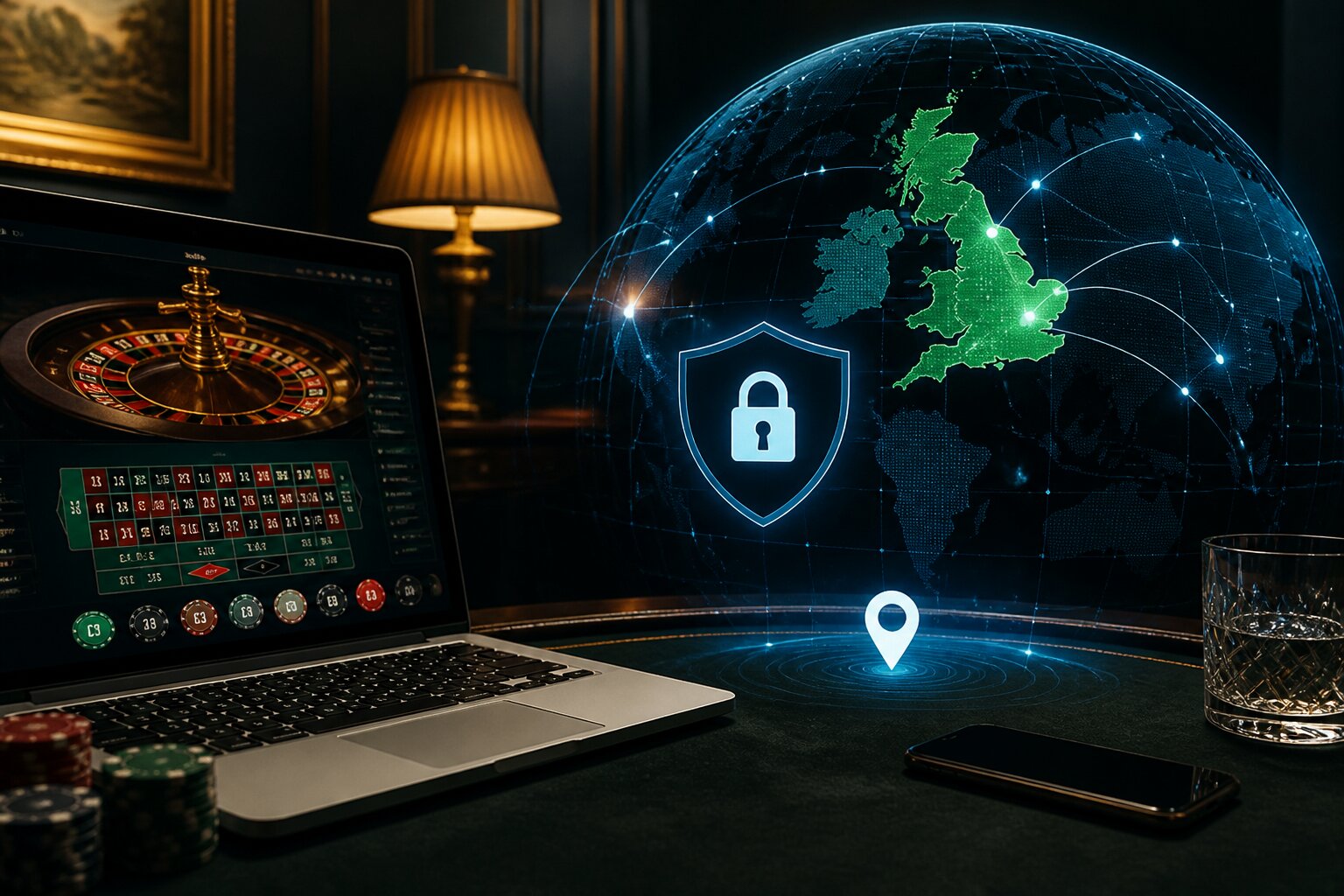
Ever tried registering for an online casino, only to be told you can’t play because of where you live? Or noticed your account gets locked if you try to log in while on holiday abroad? There’s a clear purpose behind those checks.
Online casinos use IP tracking to identify where players are connecting from. In the UK this supports legal compliance, fraud prevention and the overall safety of the service.
Below we explain what IP tracking does, how it’s used, what data is involved and how those checks protect both players and operators—while remaining mindful of privacy rules and data protection.
Why Do Online Casinos Track Player IP Addresses?
IP tracking helps operators meet legal obligations and keep their platforms secure. When someone connects, their IP address gives an approximate location for the internet connection. That information is used to confirm whether access is permitted under the operator’s licence and to block connections from jurisdictions where the site cannot lawfully operate.
Beyond jurisdiction checks, IP data contributes to age verification and account integrity. It helps identify attempts at underage gambling or the creation of multiple accounts by a single person to gain inappropriate advantages. Monitoring where logins originate also supports investigations into suspicious patterns that might indicate fraud or bonus abuse.
Taken together, these checks uphold fair play and protect players’ funds and accounts. Next, we look at how the technology actually performs these checks in real time.
How Does IP Tracking Work at Online Casinos?
When a device connects to a casino site, the connection shares an IP address with the platform. That address is matched to a geographic area using databases and geo-location services, giving the operator an approximate location rather than a precise home address.
Checks start at registration and are repeated at every login. If an IP indicates a connection from outside permitted territories, the registration will stop or the session will be closed. Operators also monitor sessions for sudden or implausible location changes and can interrupt play if the connection shifts to a restricted country.
These systems also compare incoming IPs to lists of known problematic addresses. Matches to previously flagged IPs trigger alerts so the security team can investigate. The combination of routine checks and real-time monitoring helps prevent unauthorised access and keeps accounts secure. This continual verification feeds directly into the eligibility rules discussed next.
Player Location & Eligibility Requirements
Operators must ensure players meet specific location and age requirements. In the UK that means confirming players are physically in the country and are at least 18. IP checks are one way to establish that a connection originates from within the permitted area.
If a login occurs from outside the authorised region, access may be suspended until the player can demonstrate they are back in a permitted location. Attempts to hide location using VPNs, proxies or other tools are treated as breaches of terms and can lead to account restrictions or closure. Similarly, if checks suggest an account holder is underage, the account will be suspended pending verification.
These eligibility safeguards are enforced to protect players, deter abuse and meet regulatory standards. With eligibility confirmed, operators then rely on the same data to support security and fair play measures.
What Data Does IP Tracking Collect and Is It Legal?
IP tracking collects technical connection details rather than personally identifying information. Common items recorded alongside an IP address include approximate geographic area (city or region), device type, browser and the time and date of the connection. An IP on its own does not reveal a precise street address or name.
In the UK, using IP and related technical data for regulatory compliance and fraud prevention is lawful and expected of operators. Data handling must follow the Data Protection Act and GDPR: information should be processed only for legitimate purposes, kept secure, and retained only as long as necessary. Operators typically document these practices in privacy policies and provide means for users to exercise their data rights.
This data supports security and compliance without being used for unauthorised sharing or unrelated marketing. Having clarified what is collected and why, the next section explains how that intelligence helps prevent fraud and maintain fair play.
Security, Fraud Prevention & Fair Play
IP data is a practical tool for spotting irregular activity. Patterns such as multiple accounts accessed from the same IP, or logins that diverge sharply from a player’s normal locations, can point to abuse or unauthorised access. Identifying those patterns quickly lets operators intervene before misuse escalates.
IP tracking also helps detect collusion or coordinated activity that could unfairly affect game outcomes. When a suspicious pattern appears, further checks—such as additional verification requests or temporary account holds—are used to protect other players and the integrity of games.
Attempts to circumvent location checks with VPNs or proxies are detectable by modern systems. When a connection is flagged as using such a service, operators treat it as a breach of terms; accounts may be restricted and any gains from those sessions reviewed. These measures form part of a broader security framework that includes encryption, access controls and ongoing monitoring, described next.
Protecting Player Privacy Online
Privacy protection and secure data handling underpin the use of IP tracking. Operators collect only the minimal technical information needed to meet legal and security requirements, and they apply encryption and strict access controls to keep that data safe.
Access to player data is limited to staff with a clear need to know, and systems are audited to ensure policies are followed. Data is not sold or shared for unauthorised marketing, and retention periods are kept to the minimum required by regulation and operational need. Players are encouraged to use strong, unique passwords and to keep their devices updated to reduce the risk of unauthorised access.
Together, these practices allow operators to verify location, prevent fraud and protect accounts while respecting privacy rights and legal obligations. With robust technical controls and clear procedures, IP tracking supports a safer online environment for everyone.
Play Casino Games Online at Cash Casino
At Cash Casino, we welcome you to discover the enjoyment of online casino gaming in your own way. With our wide range of entertainment options, there is something for everyone to explore at your own pace.
Getting started could not be simpler: just create an account, make a deposit and you will be ready to play. We look forward to sharing the experience with you.
**The information provided in this blog is intended for educational purposes and should not be construed as betting advice or a guarantee of success. Always gamble responsibly.