
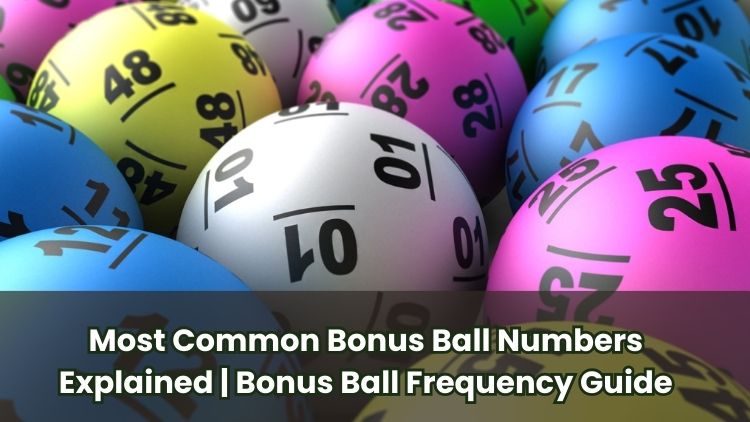
Ever wondered why some Bonus Ball numbers seem to pop up more often than others in UK lottery draws? You are not alone. Plenty of players and curious onlookers like to dig into the numbers and see how often each Bonus Ball appears.
This guide looks at the frequency of Bonus Balls across years of National Lottery results, using official data. It also explains what the Bonus Ball is and how it fits into the draw.
By breaking down the most frequently drawn Bonus Balls, you will see how the draw works in practice. No specialist maths is needed, and everything is explained in clear, simple terms. Ready to explore which numbers have shown up most often and what that tells you about the draw itself?
What Are Bonus Ball Numbers?
In UK lottery draws such as Lotto, the Bonus Ball is an extra number picked from the remaining balls after the six main numbers are drawn. It is not used for the jackpot, but it does affect certain prize tiers, such as matching five main numbers plus the Bonus Ball.
You do not pick a separate Bonus Ball when you play. If one of your chosen numbers is later drawn as the Bonus Ball, it can increase your prize, depending on how many main numbers you matched.
Each draw, the Bonus Ball is selected at random from the balls left in the machine after the six main numbers are drawn. Every remaining number has an equal chance of being chosen. While different lottery games can have their own rules, this is how it works for UK Lotto.
So, how often do specific numbers turn up in that Bonus Ball slot?
Which Bonus Ball Numbers Are Most Common?
Across National Lottery results, some Bonus Ball numbers appear more often in the historical record than others. For instance, numbers such as 38, 31, and 30 have each shown up as the Bonus Ball more times than many others when looking across a large set of Lotto draws.
That said, every draw is random, and all numbers have the same chance of being selected each time. A number appearing frequently in the past does not make it more likely in the next draw.
You might also notice numbers that have played the Bonus Ball role less often. Examples include 13 and 22, which have appeared less in some long-term counts. This is simply what the historical data shows, not an indication of what will happen next.
If you want to see how the figures move over time, the National Lottery website updates frequency tables after every draw. Understanding how the ball is picked can also help make sense of why patterns appear in the stats without changing the underlying odds.
How Is The Bonus Ball Drawn?
The Lotto draw process is designed for consistency. All numbered balls start in the machine. Six main numbers are drawn first and set aside. The Bonus Ball is then drawn from the remaining balls, so none of the main numbers can be selected twice in the same draw.
The draw equipment and procedures are tested and overseen by independent adjudicators. This includes checks before the draw and verification of results afterwards. Draws are broadcast live or recorded, with results published immediately, so the process is open to scrutiny.
With the method set out so clearly, it follows that previous results do not influence future ones.
Does Bonus Ball Frequency Affect Prize Odds?
Seeing the same Bonus Ball turn up regularly can make it seem as if certain numbers have an edge. They do not. Each draw is independent, and every number has the same chance of being selected in the next draw.
Prize odds in Lotto are fixed and published by the National Lottery. Matching the Bonus Ball matters for specific prize tiers, but which number is drawn does not change your odds. The probabilities stay the same from one draw to the next, regardless of past results.
In short, frequency tables describe what has happened so far. They do not alter the mathematics of the next draw.
Can Past Bonus Ball Frequency Predict Future Draws?
It is natural to look at past counts and wonder if they point to what might happen next. As covered above, each draw is independent. The checks on the equipment and the draw procedures ensure no sequence can be used to forecast future results.
Statistics that rank Bonus Ball appearances are useful for understanding history, spotting long-term trends in the record, and satisfying curiosity. They are not a guide to what will be drawn in the future.
How To Check Bonus Ball Frequency For Your Numbers
If you want to see how often certain numbers have appeared as the Bonus Ball, the official National Lottery website provides a detailed draw history. You can view charts that show how many times each number has been picked as the Bonus Ball and explore frequency tables for any number over the years.
Some lottery news sites and apps also offer searchable breakdowns, including when a number was last drawn as the Bonus Ball and its total appearances. You can also download past results as spreadsheets or lists to review the data yourself. Official figures are updated after every Lotto draw, so what you see reflects the latest verified results.
Whichever source you prefer, the key is that the data comes from official UK Lottery results, which keeps your checks accurate and consistent.
Where To Find Official Bonus Ball Statistics?
For current and reliable Bonus Ball statistics, start with the official National Lottery website. Its Lotto results pages include frequency charts, draw histories, and downloadable data. These are updated after every draw, so you can always work with up-to-date figures.
You may see results reported in newspapers or during televised draws, but for the most complete and searchable data, the National Lottery website or its app is the strongest option. If you use third-party sites, it is worth confirming their figures match the official source.
If playing no longer feels manageable, free and confidential support is available through GamCare. Use official sources to track the facts, and you will have everything you need to follow how the Bonus Ball has appeared over time and understand its role in every Lotto draw.
**The information provided in this blog is intended for educational purposes and should not be construed as betting advice or a guarantee of success. Always gamble responsibly.