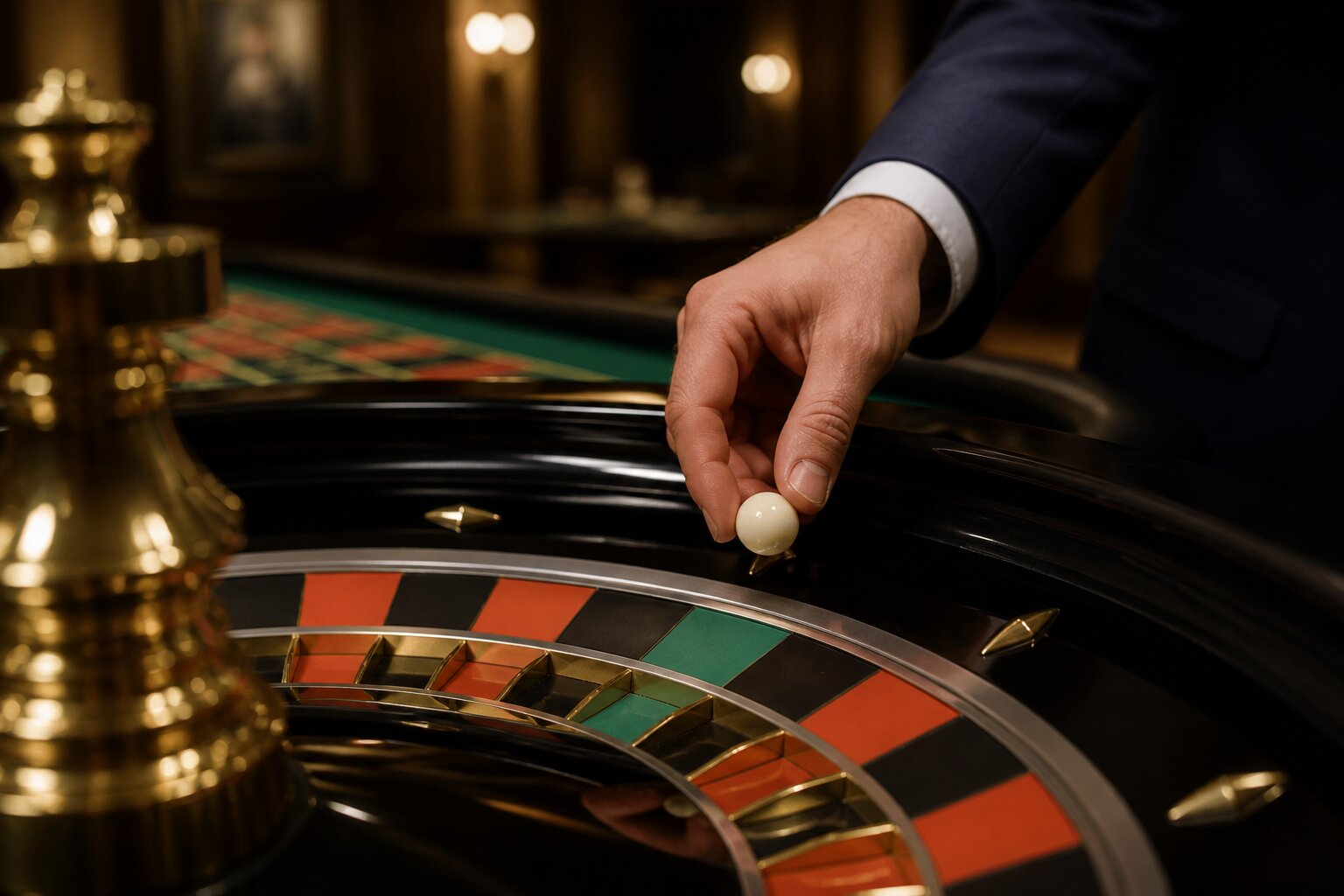
Thinking about betting on zero in roulette? It’s the single green pocket that changes how the table works and affects every bet around it.
Many players wonder whether staking on zero is just another random choice, or if it can be a sensible part of how they approach the game. Understanding the role of zero and how it interacts with the wheel and the layout helps you decide whether to include it in your wagers.
Below we look at what zero means on different wheels, how the odds work, practical examples of bets that include zero, how those bets compare to other options, and common misconceptions to avoid. Read on to get a clear picture of where zero fits into the game.
Zero on the Roulette Wheel: What Does It Mean?
In European roulette, the wheel has a single green pocket marked zero. American roulette adds a second green pocket, marked double zero, and that difference changes the total number of slots and the underlying odds.
On the betting layout, zero sits apart from the main field of numbers. You can place a straight-up bet directly on it, or include it in specific combination bets and neighbour bets that cover numbers adjacent to zero on the wheel. Because the double zero expands the number of pockets, an American wheel slightly reduces the probability of winning on any particular bet compared with the European wheel.
Zero was introduced in 1842 by the Blanc brothers to alter the mathematics of the game; its placement outside standard red/black and even/odd bets creates a consistent mathematical advantage for the house. That structural role explains why casinos retain zero on their wheels and why betting choices must account for it.
This role of zero as an outsider on the layout leads naturally into the precise odds for those straight-up and combination bets, which are covered next.
Understanding the Odds of Zero in Roulette
On a European wheel there are 37 pockets: 1–36 plus a single zero. A straight-up bet on zero therefore has a probability of 1 in 37, about 2.7% per spin. In American roulette there are 38 pockets, so each green pocket (zero or double zero) individually has a 1 in 38 chance, around 2.63% per spin.
A straight-up bet on any single number, including zero, pays 35 to 1. That means a £1 wager on zero returns £36 in total if it lands (your £35 winnings plus your £1 stake). Because the payout ratio is larger than the actual probability of success, the house edge retains an advantage over time.
Clear information about odds helps players make informed decisions. It also supports safer play: set clear limits on stakes and session length, and seek help if gambling stops being enjoyable or feels difficult to control.
Next, we look at when a player might decide to include zero in their bets and what factors influence that choice.
When Is Betting on Zero Worth Considering?
Some players choose to bet on zero because it allows them to cover a unique outcome, or because they like the way zero fits into neighbour and section bets on a European layout. Others add a small stake on zero while spreading bets across the table to increase the variety of possible returns.
Crucially, including zero does not change the house edge. It can, however, be useful in specific tactical approaches:
- Players aiming for broad coverage may include zero as part of a ‘full cover’ or high-coverage plan, accepting the overall negative expectation in exchange for the occasional larger payout.
- Players using neighbour bets on a European wheel may favour staking on zero to cover pockets adjacent to it on the wheel, combining direct and nearby coverage.
- Some prefer a modest side bet on zero to add interest to a betting pattern without materially altering overall exposure.
Whatever the reason, bets involving zero should fit within an established budget and not be relied upon as a path to recover losses or as a central income strategy.
Below are a few practical scenarios that show how those choices play out in real wagers.
Factors That Influence the Decision
When considering a bet on zero, players typically weigh how it fits with their broader approach: whether the goal is wide coverage, focused neighbour bets, or simply a small speculative stake. Game choice (European versus American) also matters because the number of green pockets changes the likelihood of zero-related outcomes.
The following example scenarios illustrate different outcomes and their practical consequences.
Example Scenarios of Zero Bet Outcomes
A straight-up bet: a £1 wager on zero returns £36 if zero lands, or the staked £1 is lost if any other number comes up.
A combination bet: staking £1 on zero plus 50p on five neighbour numbers means a win on zero yields the straight-up return while the smaller neighbour bets are lost, producing a net gain that reflects both payouts and losses.
Full table coverage: spreading a total of £37 across every number on a European wheel guarantees that the payout on the winning number is outweighed by the losses on the remaining bets, demonstrating that complete coverage does not overcome the built-in house advantage.
These concrete illustrations show how zero can be folded into different approaches without changing the underlying mathematics that favour the house. With that in mind, the next section compares zero bets directly with other common options at the table.
Comparing Zero Bets to Other Roulette Options
Understanding how a zero bet compares with red/black, odd/even and other number bets helps clarify when it might suit a player's objectives. Below is a clear breakdown using European roulette as the reference point.
Bet Type — Chance of Winning — Payout — Example Wager (£1) — Possible Return
Zero (straight up) — 1 in 37 (2.7%) — 35 to 1 — £1 on 0 — £36 (win) or £0 (lose)
Red/Black — 18 in 37 (48.6%) — 1 to 1 — £1 on Red — £2 (win) or £0 (lose)
Even/Odd — 18 in 37 (48.6%) — 1 to 1 — £1 on Even — £2 (win) or £0 (lose)
Single Number* — 1 in 37 (2.7%) — 35 to 1 — £1 on any number — £36 (win) or £0 (lose)
Split Bet — 2 in 37 (5.4%) — 17 to 1 — £1 split between two — £18 (win) or £0 (lose)
*Zero is included as a single-number (straight-up) option.
The key difference with zero is its exclusion from even-money bets such as red/black and even/odd; it only pays on a direct hit or on bets that explicitly include it. Choosing between these options depends on whether a player prefers lower-risk even-money wagers or the higher payout but lower probability associated with single-number stakes.
Next, the article addresses common misconceptions that can lead to poor decisions at the table.
Common Misconceptions About Betting on Zero
A number of myths surround betting on zero; separating fact from fiction helps players keep expectations realistic and avoid mistaken strategies.
“Zero comes up more often than other numbers.”
Every pocket on a fair roulette wheel, including zero, has the same chance of being the result on any given spin. On a European wheel that chance is 1 in 37 for each number.
“Zero bets have special properties.”
Zero has no special status that changes outcome probabilities. It is part of the wheel’s structure and interacts with other bets only through its placement on the layout.
“Zero is due if it hasn’t appeared for a while.”
Each spin is an independent event; previous results do not alter the probability of future ones.
“Including zero in every bet guarantees profit.”
No pattern of wagering on zero removes the house edge. Over many spins the mathematics of payouts and probabilities ensure the casino advantage remains.
Clearing up these misconceptions keeps play grounded in reality and supports better decision-making. With a clear understanding of zero’s role, odds and practical examples, readers can make informed choices about whether and how to include zero in their betting approach.
This overview has covered what zero is, how its odds work, when it might be considered, how it compares to other bets, and the common myths to avoid—bringing the topic to a practical close.
Play Casino Games at Cash Casino
Enjoy a relaxed and welcoming experience on our site, where you can play your favourite casino games at your own pace. We’re here whenever you fancy some entertainment and friendly service.
Getting set up couldn’t be simpler – just create an account, make a deposit, and you’re ready to explore our games. We look forward to seeing you at the tables.
**The information provided in this blog is intended for educational purposes and should not be construed as betting advice or a guarantee of success. Always gamble responsibly.