
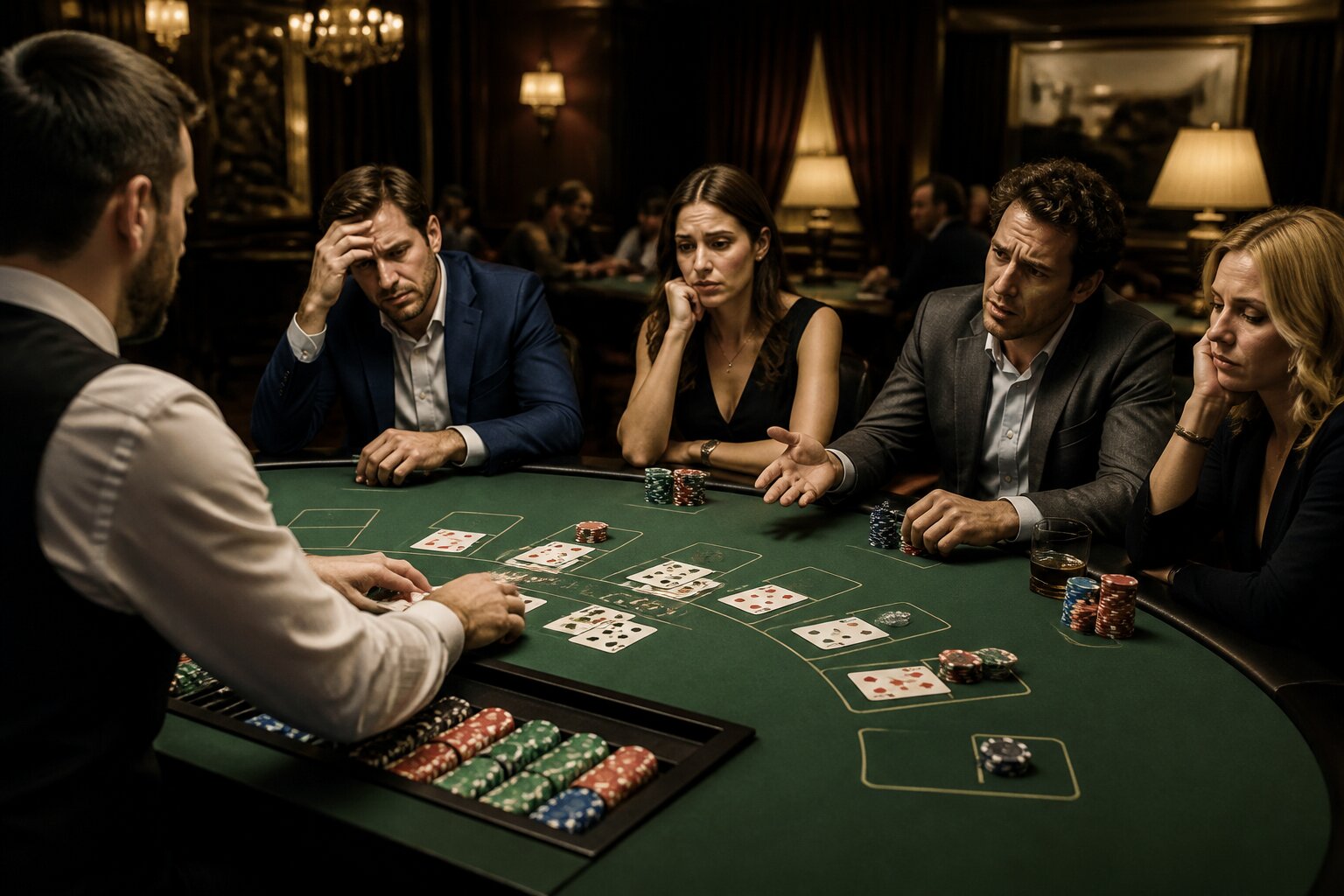
Picture this: you’ve grabbed a seat at a lively blackjack table, feeling confident about your strategy and looking forward to some well-earned entertainment. But then, someone next to you hits on 16 against the dealer’s 6—or splits their tens. Suddenly, seasoned players around the table let out a quiet groan. Have you ever wondered why so many get frustrated, and whether someone else’s bold (or baffling) moves could actually make a difference to your result?
It’s a common moment in casinos, and it raises questions about how other players’ decisions might affect your game. Whether playing socially or more seriously, the way everyone interacts at the table shapes the experience and can change outcomes for the session.
So, does a “bad” blackjack player spoil the streak or are the concerns overblown? Let’s take a closer look at what really happens when someone departs from standard strategy.
Typical Behaviours of Bad Blackjack Players
Newcomers to blackjack — and even those who’ve played a while — can fall into habits that experienced players consider mistakes. These include regularly taking extra cards on stiff hands (such as hitting hard 16 or 17) when the mathematics normally recommend standing, or splitting tens when a total of 20 is already strong.
Other common missteps are failing to double down when it offers good expected value, doubling at inappropriate times, and taking insurance without understanding the long‑term cost. Some players act on hunches rather than the basic probabilities the game relies on, which can lead to rushed or misjudged choices.
These behaviours are part of learning; they don’t mean someone shouldn’t be at the table. If you’re new, you’ll find the best way forward is to observe, ask politely when appropriate, and gradually build familiarity with the options available to each hand. If you’re already seated and see these patterns, keep the atmosphere friendly — that helps everyone concentrate and enjoy the play.
Before we look at how those choices ripple across the table, it helps to see why individual decisions matter in blackjack.
Why Are Blackjack Tables Impacted by Poor Player Decisions?
Blackjack differs from many casino games because players share the same deck. Each decision to hit, stand, split or double alters which cards remain and when they will appear. If one player takes an extra card, it changes the order for everyone else and the dealer on that round.
An example: a player who hits on a hard 16 against a dealer’s 6 might draw the card that would otherwise have caused the dealer to bust later in the deal. That single draw can turn what looked like a likely dealer bust into a winning hand for the dealer, shifting payoffs for the whole table.
These effects work in both directions. A non‑standard play can occasionally produce a sequence that benefits other players. Over many hands, these gains and losses tend to balance, but on a hand‑by‑hand basis the influence is real and can feel significant.
Understanding this shared dependency explains why some players react when others deviate from strategy — and it sets up a clearer picture of the statistical and social impacts that follow.
Impact on Other Players’ Chances and the Overall Table Dynamic
When somebody strays from basic strategy, the statistical edge that basic strategy preserves can move slightly. Basic strategy is built to reduce the house edge, which when followed closely is typically under 1%. Deviations such as hitting at the wrong time or splitting strong hands can nudge the expected house advantage upward, often by only a few tenths of a per cent. Over a handful of hands this is barely perceptible; across many hands it can have a measurable effect on returns.
The direction of that effect isn’t fixed. A seemingly poor decision might draw a card that helps the dealer bust, or it might remove a needed card from the shoe and let the dealer win. This variability, or short‑term variance, is why one session can feel unlike another even with identical strategies.
Beyond the numbers, repeated unconventional choices can alter the table’s atmosphere. Players who value methodical play may become tense or less sociable, which in turn can make the session less pleasant for everyone. That social impact is often more noticeable than the small statistical changes in house edge.
With a clearer idea of both the numerical and interpersonal effects, it’s worth weighing common beliefs about bad players to see which hold up.
Common Myths About Bad Players and Table Outcomes
A popular myth is that a single poor player can consistently ruin the table for others. In practice, while suboptimal choices change the card sequence, there’s no reliable mechanism for one player to cause repeated losses for everyone else. The deck’s order and the randomised dealing process mean outcomes vary from hand to hand.
Another misconception is that beginners massively increase the casino’s edge. As noted earlier, any increase tends to be small in percentage terms. It’s not uncommon for players to think that changing seats will fix a losing run, but seat‑position effects are negligible compared with overall variance.
Some assume that avoiding tables with inexperienced players is the only way to protect a bankroll. The better approach is to focus on consistent play, sensible stake sizing and managing sessions so they align with personal limits. Enjoyment and long‑term prudence matter more than hunting for a perfect table composition.
If these explanations leave you wondering how dealers and staff handle inexperienced players, the next section explains the typical responses you’ll see.
Dealer Reactions and Casino Responses
Dealers are trained to run games smoothly and to treat every customer with courtesy. They maintain a neutral tone regardless of how someone plays and will not chastise players for unfamiliar choices. If a player appears unsure about options, dealers may offer brief, factual guidance on procedure — for instance, clarifying whose turn it is or how a split works — without pressuring decisions.
Casinos also monitor tables for signs of distress or problem behaviour and will intervene to provide support or guidance when necessary. At regulated online sites, user interfaces aim to make options clear and help is available through support channels if a player needs it.
These safeguards help keep games orderly and ensure everyone understands how play proceeds. When dealers and staff handle matters calmly, the table stays focused on the play rather than interpersonal friction, which leads naturally into how fellow players can contribute to a constructive atmosphere.
Player Etiquette: How Should You Deal with Bad Blackjack Play?
Good manners and patience create the best playing environment. Criticising other players’ choices rarely helps; it can sour the mood and distract from the game. If tempted to offer advice, wait until you’re asked — unsolicited tips often come across as patronising.
If a player appears confused or displays signs of risky play, a discreet offer of help or a gentle suggestion to seek staff assistance can be appropriate. It’s also sensible to manage your own session responsibly: play within personal limits and avoid pressuring others about their stakes. This single, calm approach to responsible play keeps the table pleasant for everyone without repeated reminders.
Maintaining composure and respect at the table makes it easier to focus on your own decisions and contributes to a better experience for the group. With etiquette in place, you’ll see how shared stories and reactions unfold in real play.
Shared Experiences: Tales of Frustration and Unexpected Outcomes
Stories from floors and forums show the emotional highs and lows that come with shared decks. One player in Manchester recalled a newcomer’s aggressive hit on 15 that seemed to cost several people their hands — only for that same player’s later unconventional play to produce two winning hands and salvage the session for others. Online threads contain similar anecdotes: a split that looked inadvisable in the moment ended up benefitting multiple seats.
These examples illustrate the short‑term variance all players face. While a single move can trigger immediate frustration, the broad pattern over a session often includes reversing outcomes. That unpredictability is part of what keeps the game engaging, provided everyone plays within sensible limits and the table atmosphere remains respectful.
Such shared moments, whether they frustrate or surprise, are part of blackjack’s social fabric. Concluding on that note, remember that clear rules, courteous behaviour and sensible play keep the game enjoyable for everyone involved.
Play Online Casino Games at Cash Casino
We invite you to become part of our friendly community at Cash Casino, where players come together to enjoy all the excitement of online casino entertainment. Experience what it means to play as one of us and see why so many enjoy spending their leisure time here with us.
Getting started with us is easy: just create an account, make your first deposit and you will be all set to play. We look forward to welcoming you to our community.
**The information provided in this blog is intended for educational purposes and should not be construed as betting advice or a guarantee of success. Always gamble responsibly.