
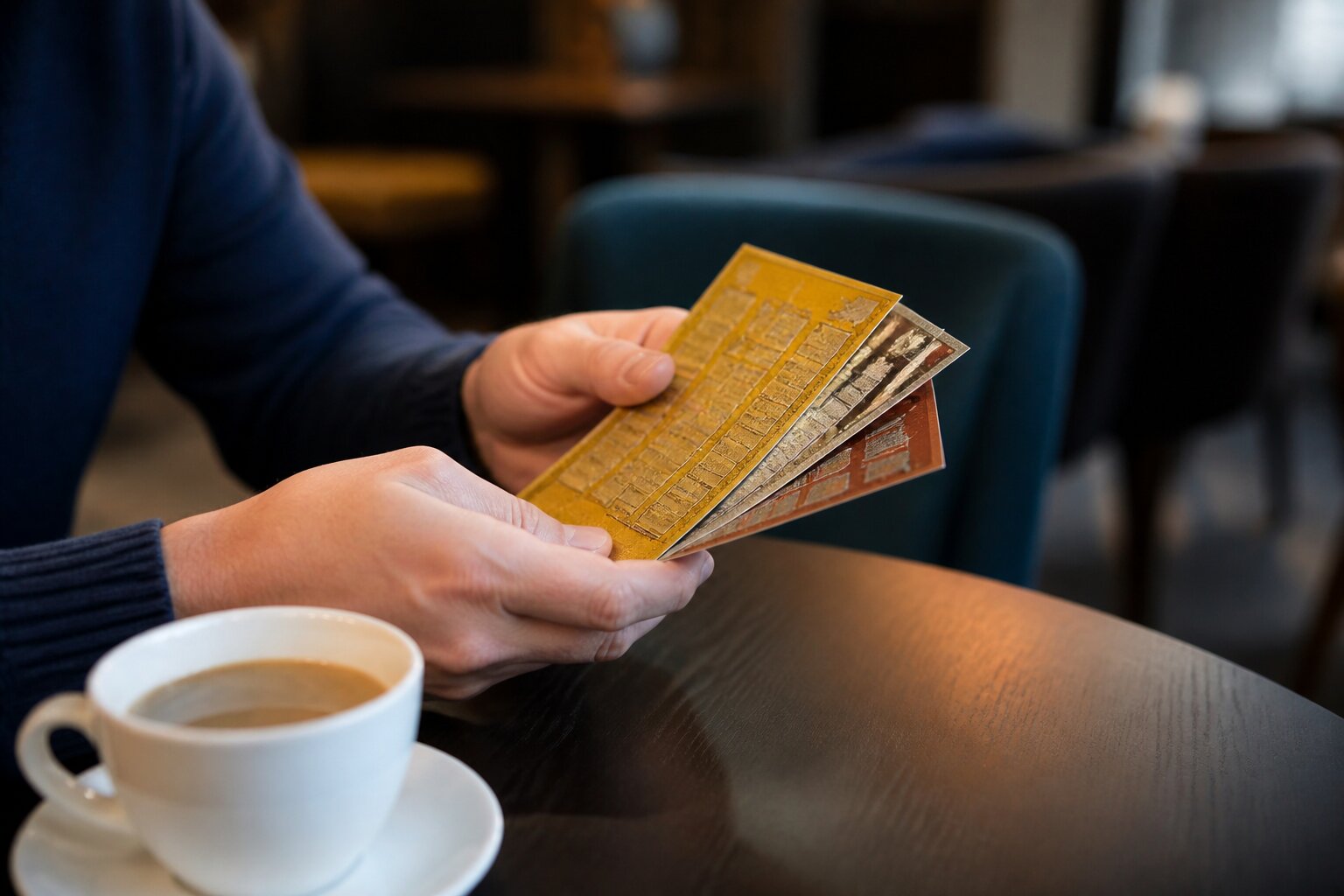
Ever stood in the shop, staring at the scratch card display, unsure whether to spend a quid or splash out a tenner? You’re not alone. Many people wonder if pricier scratch cards are worth the extra money or if the ticket price only changes the size of the prizes.
It’s natural to assume a higher price might change your chances or mean better odds. The truth is shaped by how these games are made and regulated, so understanding the mechanics helps you decide before you put money down. Read on to learn how odds, prize structures and pricing interact — and what that means for your play.
How Do Scratch Card Odds Work?
Scratch card odds are determined during the design and production of the game and must meet regulatory standards. Each card carries printed odds that indicate how frequently prizes appear across the whole run. Those odds are fixed from the outset and do not alter depending on when or where you buy a particular card.
Results are decided at the point of printing rather than at the moment you scratch the card. That means no external factor — time of day, shop, or the number of cards previously sold — affects a particular card’s outcome. The printed odds, for example “1 in 4”, describe an average frequency of winning cards within the entire batch, not a guarantee on any handful of purchases.
Regulators require transparency, so official rules and prize breakdowns are available for every game. Randomness and fixed odds are the mechanisms that ensure each card’s result is impartial and consistent with the published information. With that in mind, it’s useful to look next at how price points change what you can win rather than how often you win.
Price Points: Do Costlier Scratch Cards Offer Better Payouts?
Scratch cards are sold at different price points, commonly ranging from £1 to £10 or more. The principal effect of a higher price is on the prize structure: more expensive tickets typically feature larger top prizes and different prize tiers. They may also show a higher Return to Player (RTP) percentage in the official rules, which reflects the proportion of the total stake pool returned to players as prizes over the life of the game.
A higher price does not automatically equate to better odds of winning a prize on any single card. What usually changes is the size and distribution of prizes. For example, a £10 ticket might offer a very large top prize but fewer small payouts, while a £1 card could provide more frequent small wins. The chance of receiving any prize may be similar across some price points, even when the prize amounts differ substantially.
Because prize amounts and tiering are the main differences, checking the game’s official rules and prize table is the most reliable way to see what a particular price buys you. With the differences in prize size understood, it helps to compare how prize structures actually work across ticket types.
Comparing Prize Structures: Cheap vs Expensive Scratch Cards
Examining prize layouts reveals what your money is likely to deliver in practical terms. Both low-cost and high-cost cards use the same underlying approach — fixed odds and multiple prize tiers — but they allocate money differently between frequent small prizes and rare large ones.
Prize Frequency and Average Winnings
Lower-priced cards, such as £1 or £2 options, commonly feature a higher frequency of small prizes. Across a full print run, these cards often return modest amounts more often, which can produce a higher count of small wins even though the average payout per win is low.
Higher-priced cards, like £5 or £10 tickets, tend to have fewer small wins but pay larger amounts when they do award prizes. The average payout per winning card usually increases with ticket price because the total prize fund is distributed into bigger amounts and additional higher-value tiers.
Jackpot Sizes and Prize Tiers
The most visible distinction is the top prize. Cheaper cards rarely have very large jackpots; typical top prizes might be in the low thousands. Expensive cards, however, can offer substantially larger top prizes, often at the cost of those prizes appearing much less frequently.
Both types maintain several prize tiers, but expensive cards commonly include more tiers at higher values. That creates a different experience: cheap cards deliver more frequent, smaller wins, while expensive cards emphasise the potential for sizeable payouts. Next, we’ll dispel some common misconceptions around patterns and timing that often influence buying decisions.
Are Scratch Card Myths True?
A number of persistent beliefs about scratch cards circulate widely: that buying at certain times or from specific shops increases the chance of winning, that wins occur in predictable patterns, or that buying many cards in a row will eventually produce a win. These ideas misunderstand how the games are constructed.
Licensed games are produced under strict regulations that require predetermined, random outcomes across the print run. There is no mechanism in legitimate production or distribution that alters a card’s result after printing, so timing, store location or purchase sequence do not change a card’s prize status. Efforts to identify patterns or “hot” lots are therefore unsupported by how the games work.
Testing and oversight ensure the odds and prize breakdowns are accurate and consistent with published information. Because the outcome of each card is established in production, there is no skill or strategy that can change the underlying probability; decisions about which card to buy are essentially choices about prize structure and personal preference.
What Should You Consider Before Buying Expensive Scratch Cards?
When weighing whether to buy a higher-priced scratch card, it helps to think about the experience you want and how much you can afford to spend. Expensive tickets concentrate potential return into larger prizes, which can be compelling, but they also require a bigger outlay per play.
Setting a clear budget beforehand keeps spending predictable and prevents any single purchase from causing financial strain. If the main interest is entertainment, choose tickets that match that budget and avoid chasing larger prizes with money that should be used elsewhere. Many retailers and regulated platforms offer tools to limit spending and access to support services, which can help maintain control while playing.
Knowing what the prize structure looks like for the specific game you’re buying — the RTP, prize tiers and the frequency of smaller payouts — gives a realistic expectation of the likely outcome, and helps determine whether the cost aligns with your goals. With those practical considerations in mind, the final section ties everything together.
Summary: Do Expensive Scratch Cards Really Improve Your Chances?
The ticket price changes the prize landscape more than the chance of winning. Pricier scratch cards generally concentrate the prize fund into larger top prizes and different tiering, but they do not alter the fundamental odds printed on the card. All outcomes are predetermined at production and governed by regulatory standards to ensure fairness and transparency.
If you choose to play, treat scratch cards as entertainment and keep spending within a preplanned budget. Decide whether you prefer more frequent small wins or the possibility of rarer large prizes, check the game’s rules and prize table before buying, and use available spending controls if needed. Play with clear expectations, and you’ll be better placed to enjoy the experience responsibly.
**The information provided in this blog is intended for educational purposes and should not be construed as betting advice or a guarantee of success. Always gamble responsibly.