
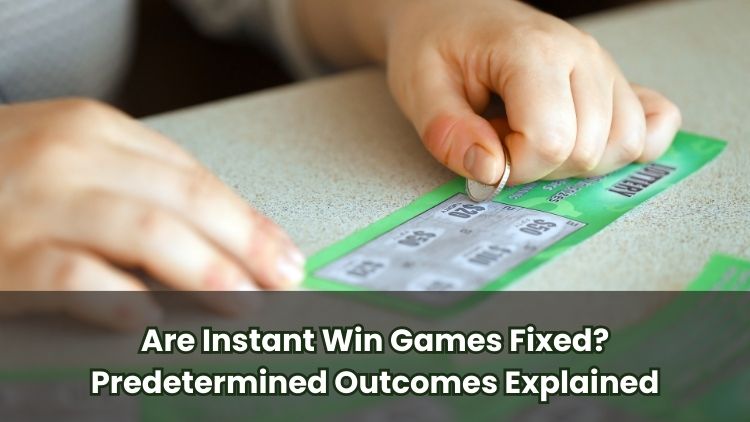
Instant win games are popular, and it is natural to ask how fair they are. Many people want to know whether results are fixed or how outcomes are actually decided, especially if they are new to online play.
This article breaks down how these games work, the role of Random Number Generators (RNGs), and the rules around regulation and independent testing.
You will also find a clear explanation of Return To Player (RTP), what to look for if something seems off, and the steps available if you have concerns about a game’s fairness.
Read on to learn more.
How Do Instant Win Games Work?
Instant win games are digital versions of scratch cards or other quick-play formats. Players place a stake and see the result straight away on the screen.
Each time someone plays, the outcome is generated there and then. It might reveal a prize or show no win on that round.
These games appear in many themes on casino sites, but the basic idea is simple. Outcomes are not influenced by previous plays, and each round is independent, so the chance of winning does not change from one entry to the next.
With the basics in place, the next question is obvious: are results decided in advance or created at the moment you play?
Can Instant Win Games Have Predetermined Outcomes?
Some people wonder if instant win games are set up so outcomes are decided before a player starts. In the UK, most online versions use an RNG, which produces each result at the exact time the player takes part rather than selecting it ahead of time.
There are a few exceptions. Some printed or digital scratch cards allocate prizes before they are released, meaning winning and losing tickets are distributed according to a plan set in advance.
For online play, licensed operators must follow rules that prevent unfair predetermination and ensure results are produced in the way the game describes. Sticking to regulated sites gives you the benefit of that oversight.
The key tool behind this is the RNG, which handles the decision-making in real time.
RNGs And How They Affect Instant Win Outcomes
A Random Number Generator is a piece of software that produces random outcomes for each round of play. It runs in the background, creating a fresh result every time without carrying over anything from previous rounds.
Because an RNG is designed to be unpredictable, patterns or cycles cannot be identified. Each entry stands on its own, which prevents anyone from gaining an unfair edge.
As with other core systems, RNGs used by licensed operators are assessed by independent testing labs to confirm they behave as expected. That testing underpins the fairness players should see on screen.
So, who checks the checkers? That is where regulation and ongoing oversight come in.
Regulation And Independent Testing Of Instant Win Games
Instant win games in the UK sit under rules set by the Gambling Commission. Companies offering them must hold a licence and meet technical standards designed to protect players.
Independent agencies test games before they go live. They review the software, run large volumes of simulated plays, and confirm that features work as described. If a game promises a prize reveal when certain symbols align, testing verifies that trigger and the payout table behind it.
Oversight does not end at launch. Routine audits confirm that RNG outputs and payout rates stay within approved limits. If a game falls short, it can be withdrawn until fixed.
Fairness checks confirm that results are random. RTP, on the other hand, tells you how much a game pays back on average over time.
Return To Player (RTP) Explained For Instant Win Games
Return To Player, or RTP, shows the average percentage of total stakes that a game pays back over a long period. For example, if an instant win game has a 95% RTP, then in theory £95 out of every £100 wagered is returned as prizes over time, with £5 retained by the operator.
RTP is not a promise for any single session. Short-term results can be higher or lower than the stated figure because the percentage is calculated over a very large number of plays.
In the UK, operators must display RTP so players can see how a game performs in the long run. It is a useful comparison point, not a predictor of what will happen next.
If you know what RTP tells you, the next step is working out whether a game is being run properly in practice.
How Can You Tell If An Instant Win Game Is Fixed?
Start by checking licensing. Legitimate operators in the UK display their Gambling Commission licence in the site footer, and the details can be verified on the regulator’s register.
Look for seals or references to independent testing agencies such as eCOGRA, iTech Labs, or GLI. These organisations certify that the RNG and payout logic have been examined and approved.
A lack of clear information about licensing, testing, or RTP is a warning sign. Seeing a run of results you do not like is not, on its own, evidence of a problem because outcomes vary naturally. If you have doubts, use the official channels available through regulated sites.
If you still want firmer confirmation, there is published evidence you can check.
What Evidence Shows Instant Win Games Are Fair?
Licensed operators must meet technical standards, and their games are subject to certification. Testing labs provide documentation confirming that the RNG behaves randomly and that advertised features match real outcomes.
Regular audits examine whether payout percentages fall within approved ranges and whether results align with the game’s specification. Some operators publish summaries or links to certificates so players can review them.
Disputes and complaints are handled by approved alternative dispute resolution services, giving an independent route if something goes wrong. The existence of these checks, records, and escalation paths is strong evidence that fairness is actively monitored rather than simply claimed.
And if you ever feel something is not right on a specific title, there is a clear way to raise it.
What To Do If You Suspect A Fixed Instant Win Game?
If a game seems off, stop playing it and review the basics: the site’s licence details, the testing certificates, and the game rules. Share your concern with customer support and ask for clarification or links to recent audit information.
When a query is not resolved, use the operator’s complaints process, which sets out timelines and what evidence to provide. If the outcome remains unsatisfactory, escalate the case to the site’s approved alternative dispute resolution service. The relevant links are usually found in the complaints policy or footer.
Only stake what you can afford to lose and take breaks to keep your decisions clear. If gambling starts to affect your well-being or finances, seek support early. Organisations such as GamCare and GambleAware offer free, confidential help.
**The information provided in this blog is intended for educational purposes and should not be construed as betting advice or a guarantee of success. Always gamble responsibly.